Cinnamon is one of those simple ingredients that can do a lot of work in the kitchen. It adds warmth, sweetness, and depth to food without needing much sugar, and it fits easily into both sweet and savory meals. For people trying to stay active, eat well, and support healthy aging, cinnamon can be a practical spice to keep on hand every day.
Beyond flavor, cinnamon has been studied for its potential to support healthy blood sugar balance, antioxidant protection, heart health, and digestion. And while all cinnamon may look similar at first glance, not all cinnamon is the same. Ceylon cinnamon is usually considered the better everyday choice than Cassia cinnamon, especially if you use cinnamon often.
What Makes Cinnamon Worth Adding to Your Diet?
Cinnamon comes from the bark of trees in the Cinnamomum family. Once dried, the bark curls into the familiar sticks we know, or it can be ground into powder for easy use in recipes. Its natural compounds give it a sweet, slightly spicy flavor that can make healthy foods more enjoyable.
That matters more than people realize. A healthy eating plan works better when it is sustainable. If cinnamon helps you enjoy plain yogurt, oats, cottage cheese, fruit, or whole-grain toast, it may make nutritious choices easier to repeat.
Healthy Benefits of Cinnamon
1. It supports healthy blood sugar balance
One of the most talked-about benefits of cinnamon is its possible role in helping support healthy blood sugar levels already within the normal range. Some research suggests cinnamon may help the body respond better to insulin, which is important for energy, appetite control, and metabolic health.
This does not mean cinnamon is a cure or replacement for medical care, but it can be a smart addition to meals that already focus on protein, fiber, and healthy fats. For example, cinnamon with Greek yogurt, berries, and nuts is a much better blood-sugar-friendly snack than a sugary pastry.
2. It is rich in antioxidants
Cinnamon contains antioxidants, which help protect cells from oxidative stress. That matters because everyday stress, aging, intense exercise, and poor diet can all contribute to free radical damage over time. A diet rich in colorful fruits, vegetables, herbs, and spices is one of the easiest ways to support overall wellness.
For people who want to stay strong and active as they age, antioxidant-rich foods are a simple, practical habit that can fit into real life.
3. It may help support heart health
Some studies suggest cinnamon may have a positive effect on certain heart-health markers, including triglycerides, LDL cholesterol, and blood pressure. Results vary, and cinnamon should not be viewed as a treatment, but it can be part of a heart-conscious eating pattern built around whole foods.
Try thinking of cinnamon as one more tool in a larger healthy routine that includes movement, sleep, stress management, and balanced meals.
4. It may support digestion
Traditionally, cinnamon has been used to help with digestive comfort. Its warming quality makes it a popular spice in teas, oatmeal, and baked foods, especially during colder months. While it is not a fix for digestive issues, many people find it soothing in small amounts.
If you enjoy warm foods in the morning, cinnamon can be a nice way to make breakfast feel more satisfying without relying on extra sugar.
5. It can help you reduce added sugar
One of cinnamon’s most practical benefits is that it can make foods taste sweeter without adding sugar. This is useful if you are trying to cut back on sweets but still want your food to taste good. A little cinnamon can go a long way in coffee, oatmeal, smoothies, yogurt, and baked goods.
For many people, a healthier diet is not about perfection. It is about making small swaps that are easy to keep doing. Cinnamon is one of those swaps.
Why Ceylon Cinnamon Is Better Than Cassia Cinnamon
Most grocery-store cinnamon in the United States is Cassia cinnamon, which is inexpensive and has a stronger, more pungent flavor. Ceylon cinnamon, often called “true cinnamon,” is lighter in color, more delicate in flavor, and generally considered the better choice for regular use.
The key difference: coumarin content
The biggest reason Ceylon cinnamon is preferred is its much lower coumarin content. Coumarin is a naturally occurring compound found in Cassia cinnamon that can be hard on the liver if consumed in high amounts over time. Most people will not have a problem with small, occasional use, but if cinnamon is part of your daily routine, Ceylon is the safer choice.
That is especially important for people who:
- Use cinnamon every day
- Add it to coffee, oatmeal, yogurt, smoothies, and baking regularly
- Want a long-term healthy habit without overdoing one spice
Flavor and everyday use
Cassia cinnamon has a stronger, sharper flavor, which some people enjoy in baking. Ceylon cinnamon tastes milder, sweeter, and more refined. For everyday eating, especially on foods like fruit, yogurt, toast, or oats, Ceylon often works better because it blends in smoothly instead of overpowering the dish.
Bottom line: If you use cinnamon only occasionally, Cassia may be fine in moderation. If you want to make cinnamon a regular part of your healthy eating routine, Ceylon cinnamon is the better option.
Easy Ways to Use Cinnamon in Meals and Snacks
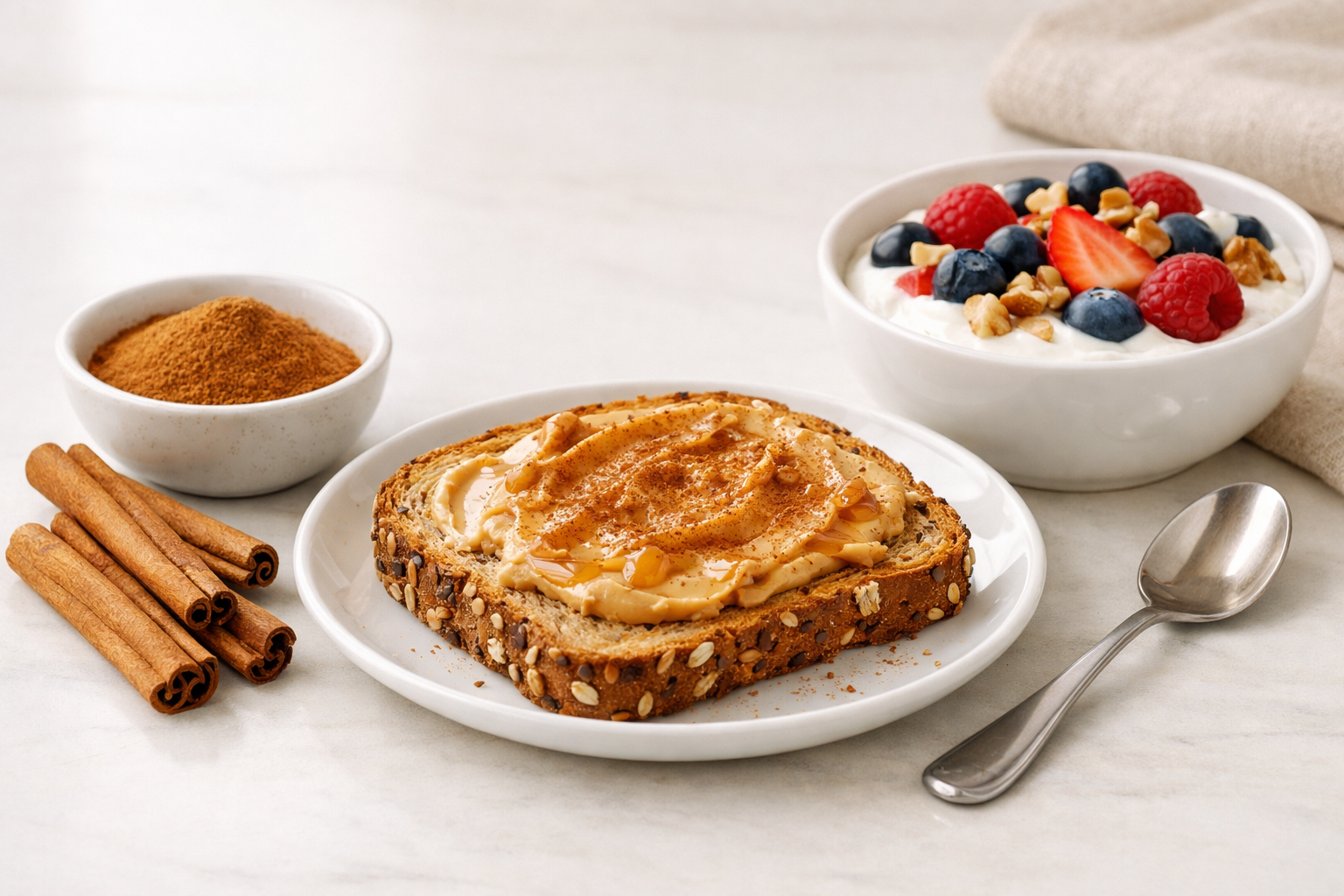
Here are a couple of great ideas: seed bread with peanut butter, cinnamon, and honey, plus Greek yogurt with berries and nuts. Those are both excellent choices because they combine cinnamon with protein, fiber, and healthy fats.
Here are more simple ways to use cinnamon in everyday recipes and snacks:
- Oatmeal: Stir cinnamon into cooked oats with sliced banana, walnuts, and a spoonful of almond butter.
- Smoothies: Add a pinch to a berry, banana, or pumpkin smoothie for extra flavor.
- Apple slices: Sprinkle cinnamon over apple wedges with peanut butter or cottage cheese.
- Toast: Mix cinnamon with a little nut butter and a drizzle of honey on whole-grain toast.
- Coffee or tea: Add a light dusting to your cup, or stir in during brewing for a warm, cozy flavor.
- Roasted sweet potatoes: Cinnamon pairs well with roasted sweet potatoes, especially with a little olive oil and sea salt.
- Over popcorn: Toss warm popcorn with cinnamon and a touch of coconut oil for a simple snack.
- Chia pudding: Blend cinnamon into chia pudding with vanilla and berries.
- Baked protein muffins: Use cinnamon in muffins made with oats, eggs, banana, and Greek yogurt.
- Warm milk or plant milk: Add cinnamon to steamed milk or a warm evening drink.
- Over pancakes or waffles: Sprinkle cinnamon on top of whole-grain pancakes with fruit instead of heavy syrup.
- In savory dishes: A small amount works well in chili, stews, curry, and roasted carrots.
If you like simple meals and snacks that support energy and recovery, cinnamon can help make the basics taste better without complicating your routine.
How Much Cinnamon Is Enough?
There is no single perfect amount for everyone, but a small amount daily is often enough for flavor and possible health support. Many people use 1/4 to 1 teaspoon per day in food, depending on taste and tolerance. If you use cinnamon often, choosing Ceylon helps keep coumarin exposure lower.
It is also worth remembering that more is not always better. Cinnamon is best used as part of a balanced diet, not in large amounts taken like a supplement without guidance.
Practical rule: Use cinnamon often enough to enjoy it, but keep the portions reasonable and choose Ceylon cinnamon when it is part of your regular routine.
Key Takeaways
- Cinnamon adds flavor and can help make healthy foods more enjoyable.
- It may support healthy blood sugar balance, antioxidant protection, heart health, and digestion.
- Cinnamon is also helpful for reducing added sugar in everyday meals and snacks.
- Ceylon cinnamon is better than Cassia cinnamon for frequent use because it contains far less coumarin.
- Simple ways to use cinnamon include oatmeal, yogurt, fruit, toast, smoothies, coffee, roasted vegetables, and baked snacks.
FAQ
Is cinnamon actually good for you?
Yes, cinnamon can be a healthy addition to your diet when used in normal food amounts. It offers flavor, antioxidants, and possible support for blood sugar and heart health.
What is the difference between Ceylon and Cassia cinnamon?
Ceylon cinnamon is lighter, milder, and lower in coumarin. Cassia cinnamon is stronger in flavor and much higher in coumarin, which is why Ceylon is better for frequent use.
Can I use cinnamon every day?
Many people do. If you use it daily, Ceylon cinnamon is usually the safer choice. Keep portions moderate and use it as part of a balanced diet.
What are the best foods to pair with cinnamon?
Cinnamon works well with oats, yogurt, berries, apples, bananas, nut butter, whole-grain toast, roasted sweet potatoes, smoothies, and coffee or tea.
Does cinnamon help with weight loss?
Cinnamon is not a weight-loss solution by itself, but it may help some people reduce added sugar and enjoy healthier foods more often. That can support a balanced eating plan over time.
Should I avoid Cassia cinnamon completely?
Not necessarily. Small, occasional use is usually fine for most people. The main concern is regular, high intake over time. If you use cinnamon often, Ceylon is the better choice.
Final Thoughts
Cinnamon is a small ingredient with a big role to play in a healthy lifestyle. It adds comfort, flavor, and variety to foods that already support your goals, whether those goals are better energy, better nutrition, or simply eating in a way that feels sustainable. When used wisely, cinnamon can make healthy eating more enjoyable and more realistic.
If you want the best everyday option, choose Ceylon cinnamon. It gives you the flavor and benefits you want with less concern about coumarin. Use it in your breakfast, snacks, drinks, and even savory meals, and let a simple spice help you build better habits one meal at a time.
Like this article? Please share it. Also, register to follow LINKfit and receive our latest articles once a week. LINKfit – Show up.