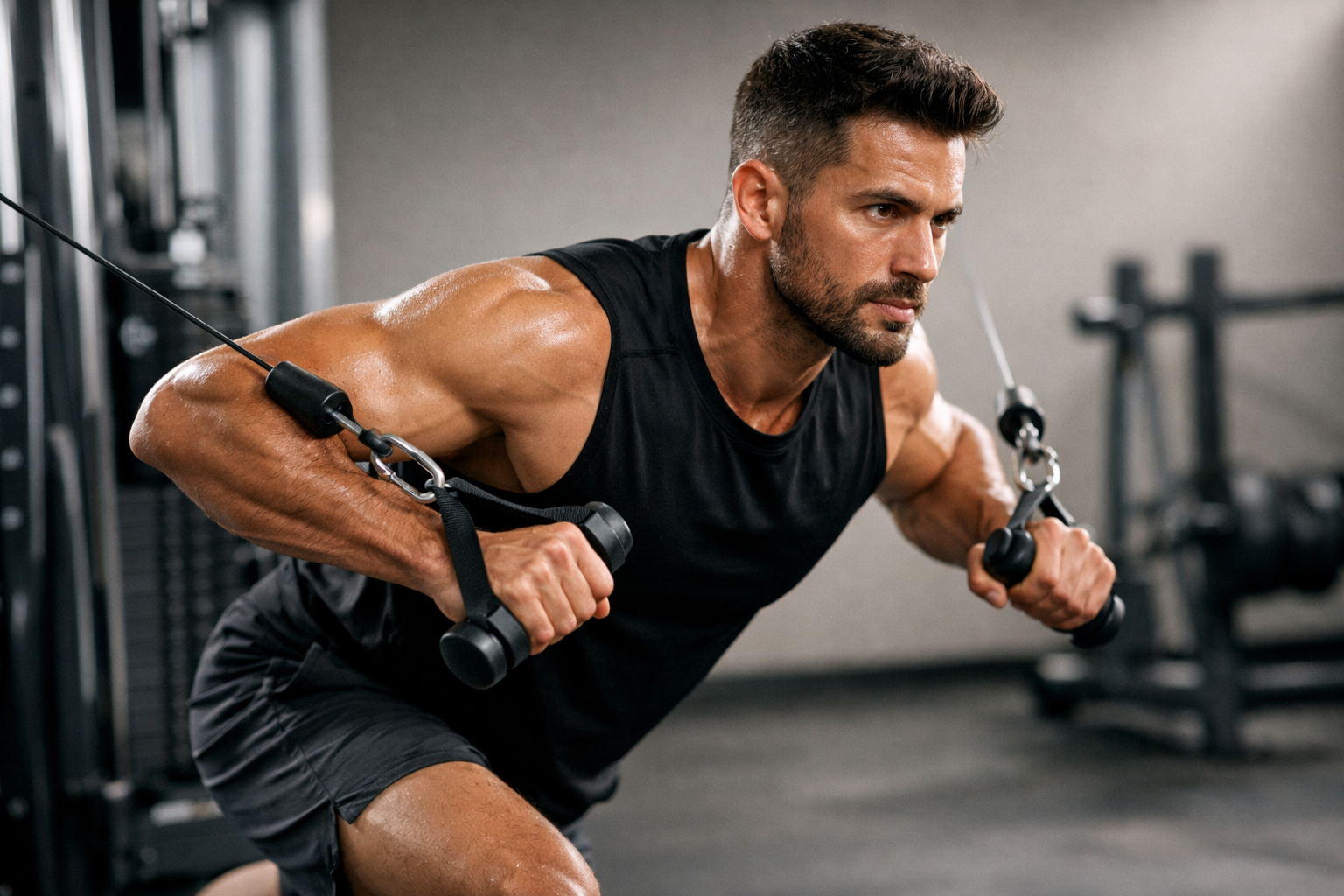
One of the smartest ways to make steady progress in resistance training is also one of the simplest: change your position, change the angle, and change the challenge. When you vary how you move a resistance from one session to the next, you place stress on different muscle fibers, recruit your muscles in new ways, and build a more complete, well-rounded level of strength. Over time, that can support better muscle development, improve movement quality, and help reduce the chance of injury when your body has to adapt to different demands in sport, work, or everyday life.
This idea matters whether you are a beginner learning the basics, a former athlete getting back into training, or someone who simply wants to stay strong, mobile, and capable as you age. The goal is not to constantly reinvent your workout. The goal is to train with enough variety that your body keeps adapting, your muscles keep growing, and your joints and movement patterns stay ready for real life.
Why position and angle matter in resistance training
Muscles do not work in only one way. Their output changes depending on body position, joint angle, range of motion, and the line of resistance. A squat, a lunge, and a split squat all train the lower body, but each one loads the muscles slightly differently. The same is true for a chest press, overhead press, or incline press. Even small changes can shift where the tension lands and which muscle fibers are doing the most work.
That matters because muscles adapt to the stress you place on them. If you repeat the same movement, with the same setup, every time, your body becomes efficient at that exact task. Efficiency is useful, but it can also limit development. Changing your position or angle introduces fresh stimulus, which can challenge more fibers, encourage balanced growth, and reduce the chance that one area becomes overused while another stays undertrained.
Good training is not just about doing more. It is about giving your body the right kind of challenge so it can adapt, strengthen, and stay resilient.
How changing angles helps build muscle
Different angles change leverage, tension, and muscle recruitment. When a muscle has to produce force in a new position, it has to work harder to stabilize, control, and move the load. That extra demand can help stimulate growth.
1. More muscle fibers are recruited
When an exercise is performed from a different angle, the body may recruit additional motor units to complete the movement. In simple terms, more fibers get involved. That can support more complete development over time because the muscle is not being trained in only one narrow pattern.
2. The muscle is stressed through different parts of its range
Some positions challenge a muscle more at the start of a movement, while others load it more at the midpoint or near the end. Training from a variety of angles helps expose the muscle to tension across a broader range. That is useful for both size and function.
3. Weak links become easier to spot
If an exercise feels easy in one position but difficult in another, that may reveal an imbalance or weak point. Over time, training from multiple angles can help you address those gaps before they turn into performance limitations or discomfort.
Why well-rounded muscles matter for injury prevention
Strong muscles are important, but strong muscles that can only perform well in one pattern are not enough for most people. Life does not happen in a perfectly controlled gym position. You bend, reach, twist, lift, carry, accelerate, slow down, and change direction. If your training includes different positions and angles, your body has a better chance of handling those real-world demands.
Well-rounded muscle development can support injury prevention in a few important ways:
- Improved balance around joints: When the muscles around a joint are trained more evenly, the joint may be better supported during movement.
- Better movement control: Variety in training teaches your body to stabilize under different conditions.
- Reduced overuse patterns: Repeating the same load and position too often can place repeated stress on the same tissues.
- Greater adaptability: A body exposed to different challenges can respond more efficiently when competing, lifting, or reacting to unexpected movement.
This does not mean injuries are eliminated. It means your body is better prepared to absorb and adapt to stress. That preparation matters for runners, lifters, field sport athletes, and everyday people alike.
What this looks like in a training plan
Changing position and angle does not require complicated programming. In fact, some of the best progress comes from a few simple adjustments made over time.
Use different stances
A wider stance, narrower stance, staggered stance, or split stance can change how your body loads the movement. For example, a goblet squat and a split squat both train the legs, but they challenge stability, balance, and muscle recruitment differently.
Alter body angle
Changing body angle can significantly affect resistance training. Think about incline, flat, and decline pressing variations, or how a row changes when your torso is more upright versus more hinged forward. Even changing the angle of a push-up by elevating your hands or feet changes the stress on the body.
Adjust the direction of force
Free weights, cables, bands, and machines all create resistance differently. A dumbbell press challenges stabilization, a cable press provides more constant tension, and a machine may offer more fixed support. Using more than one tool gives your muscles a broader training experience.
Change the plane of movement
Most people focus on forward and backward movement, but the body also needs side-to-side and rotational strength. Lunges, lateral steps, carries, anti-rotation presses, and rotational chops can all help create a more complete base.
Examples of useful exercise variations
Here are a few practical examples of how changing position or angle can improve your training:
- Chest: Flat bench press, incline press, push-ups with hands elevated, cable fly variations
- Back: Seated row, bent-over row, one-arm row, chest-supported row, face pulls
- Legs: Back squat, goblet squat, split squat, step-up, reverse lunge, lateral lunge
- Shoulders: Overhead press, landmine press, dumbbell press seated or standing, lateral raise variations
- Core: Planks, side planks, dead bugs, Pallof press, carries, anti-rotation holds
You do not need to do every version in every workout. The point is to use variation strategically so your body learns to handle more than one challenge.
How to use variety without losing progress
Some people worry that if they keep changing exercises, they will never get good at anything. That is a fair concern. The answer is to keep your movement patterns consistent while varying the angle, position, or tool.
For example, you can keep squatting, pressing, hinging, pulling, lunging, and carrying as your main movement patterns. Then you rotate the variations every few weeks or use different versions within the same week. This way, you still build skill and progressive overload, while giving the body enough variety to adapt in multiple ways.
A simple approach could look like this:
- Keep one main lift consistent for a block of training so you can track progress.
- Add one or two variations to challenge the muscles from another angle.
- Progress the load, reps, or control over time instead of constantly chasing novelty.
- Use variation to support recovery when a joint or muscle group needs a different stress.
Training for everyday life and sport
People often think resistance training is only about looking stronger. But strength that transfers is what really matters. A well-trained body is one that can get off the floor, lift groceries, climb stairs, swing a golf club, get up quickly, or explode into action in sport.
That is why changing positions and angles matters so much. It teaches the body to produce force in different situations. It also helps older adults and returning trainees build confidence because movement becomes less fragile and more adaptable.
For former athletes, this approach can be especially valuable. Sports rarely happen in controlled, symmetrical positions. By training from multiple angles, you rebuild the kind of strength that supports quick reaction, stability, and power under pressure.
Common mistakes to avoid
Variation is helpful, but only when used with intention. A few mistakes can limit results:
- Changing everything too often: If every workout is completely different, it becomes hard to measure progress.
- Ignoring form: New angles only help if the movement stays controlled and safe.
- Chasing intensity without recovery: More stress is not always better. Muscles grow and adapt during recovery.
- Only training what feels comfortable: The body benefits from learning new positions, especially ones that improve stability.
The best training plans balance consistency and variety. Keep your foundations, then adjust the details with purpose.
Key takeaways
- Changing your position and angle during resistance training helps challenge muscles in new ways.
- Different angles can recruit more muscle fibers and support more complete development.
- Well-rounded muscle growth may improve movement quality and reduce injury risk.
- You can use simple changes in stance, body angle, resistance type, and movement plane.
- Consistency still matters, so keep your main movement patterns while varying the setup strategically.
FAQ
How often should I change exercise angle or position?
You do not need to change every workout. Many people do well by keeping core movements consistent for several weeks while rotating small variations as needed. The right timing depends on your experience, goals, and recovery.
Is exercise variation better than sticking to one routine?
Both matter. Consistency helps you progress and measure improvement, while variation helps develop a more balanced and adaptable body. The best approach usually includes both.
Can changing angles help with muscle growth if I am a beginner?
Yes. Beginners can benefit from learning a few basic movement patterns and then gradually exploring variations. Even small adjustments can improve muscle engagement and build better movement awareness.
Does training from different angles help older adults?
Absolutely. It can help support balance, coordination, joint control, and confidence with movement. For older adults, the goal is often not just strength, but also resilience in everyday tasks.
Will changing exercises all the time stop me from getting stronger?
Not if you do it wisely. Keep the main pattern stable long enough to improve, then introduce variations in a planned way. That allows strength gains while still giving your body useful new challenges.
Build strength that lasts
Resistance training works best when it prepares your body for more than one kind of stress. Changing position and angle helps your muscles learn, adapt, and grow in a more complete way. It can improve strength, shape, stability, and durability while helping your body become more capable under different demands.
Whether your goal is to return to the gym, stay active as you age, or simply feel stronger in daily life, smart variation can help you get there. Train with purpose, recover well, and give your body the kind of challenge that helps it become stronger, not just in one position, but in many.
Like this article? Please share it.
Also, register to follow LINKfit and receive our latest articles once a week. LINKfit – Show up.