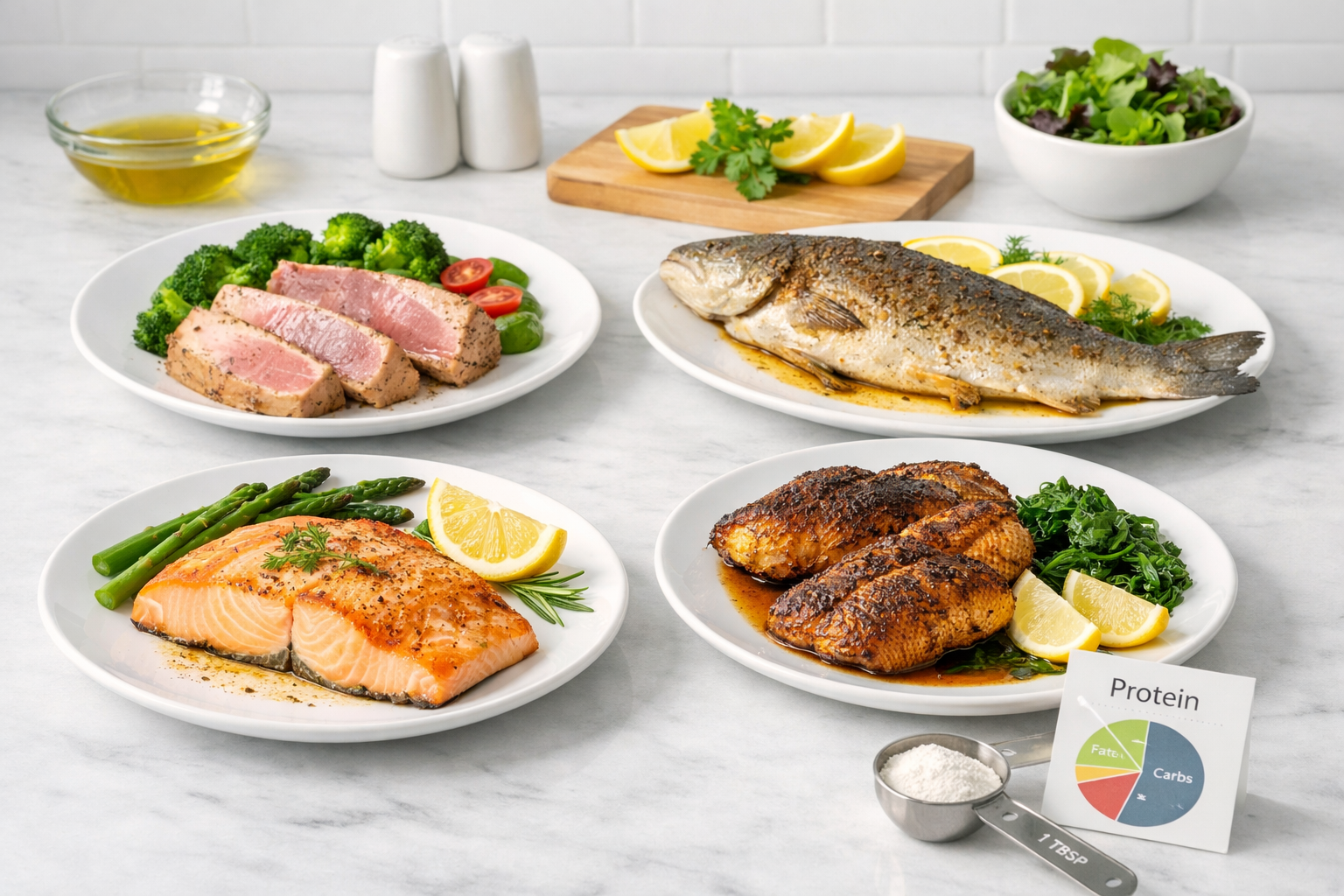
Fish is one of the easiest, most practical ways to add high-quality protein to your diet. Whether you are trying to build muscle, maintain a healthy weight, recover from training, or simply eat more balanced meals, fish gives you a lean source of protein along with nutrients that support your heart, brain, and overall energy. From salty ocean favorites like salmon and tuna to freshwater options like trout and catfish, there are plenty of choices that can fit into a healthy lifestyle.
Why fish is such a strong protein choice
Protein matters because it helps repair muscle tissue, supports immune function, and keeps you feeling full after meals. Fish stands out because it provides complete protein, meaning it contains all nine essential amino acids your body needs but cannot make on its own.
For active adults, fish can be especially useful after workouts. It is easy to digest, quick to cook, and versatile enough for lunch, dinner, or even meal prep. For older adults, fish can also be a smart choice because maintaining muscle becomes more important with age. A protein-rich diet helps support strength, mobility, and daily function.
Another advantage is that many fish are naturally lower in saturated fat than other animal proteins. Fatty fish also supply omega-3 fatty acids, which are linked to heart and brain health. That means fish offers more than just protein; it brings a useful nutrient package to the table.
How much protein do different fish provide?
Protein content changes slightly depending on the type of fish, whether it is cooked or raw, and how it is prepared. For an easy comparison, here are approximate amounts per 3-ounce cooked serving, which is about the size of a deck of cards.
- Tuna: about 24 to 26 grams of protein
- Salmon: about 22 to 23 grams of protein
- Sardines: about 22 to 23 grams of protein
- Halibut: about 23 grams of protein
- Trout: about 20 to 22 grams of protein
- Tilapia: about 21 grams of protein
- Cod: about 19 grams of protein
- Catfish: about 18 to 20 grams of protein
- Haddock: about 20 grams of protein
If you want a simple takeaway, tuna is usually one of the highest-protein options, while salmon is close behind and adds more healthy fats. Lean white fish like cod and haddock still deliver strong protein numbers with fewer calories and less fat.
Comparing one fish to the others
Let’s say you choose salmon as your standard portion. A 3-ounce serving gives you around 22 to 23 grams of protein. That is:
- slightly less than tuna, which often provides 2 to 3 grams more protein per serving
- more protein than cod by roughly 3 to 4 grams
- very close to sardines, which are also a strong protein and nutrient source
- similar to halibut, trout, and tilapia depending on the exact cut and cooking method
This shows that you do not need to chase only one “best” fish. Several types can support your protein goals, and the best choice often depends on your taste, budget, and how you plan to use it in meals.
Saltwater fish and freshwater fish: what is the difference?
Fish come from different environments, and both saltwater and freshwater varieties can be excellent protein sources. The main difference is not just where they live, but also their nutrient profile, flavor, and texture.
Saltwater fish
Saltwater fish such as salmon, tuna, cod, sardines, halibut, and haddock are popular for good reason. Many are rich in protein, and some are especially high in omega-3 fatty acids.
Common benefits of saltwater fish include:
- Higher omega-3 content in fatty species like salmon and sardines
- Firm texture and strong flavor that work well for grilling, baking, or pan-searing
- Excellent protein density with very little added fat in lean varieties
If your goal is heart health, recovery, or simply a more satisfying meal, saltwater fish can be a great regular option.
Freshwater fish
Freshwater fish such as trout, catfish, and tilapia are also practical protein choices. They are often mild in flavor, which makes them appealing for people who are newer to fish or prefer a less “fishy” taste.
Common benefits of freshwater fish include:
- Good protein levels with a lighter flavor profile
- Easy meal flexibility for simple seasoning and family-friendly recipes
- Wide availability in many grocery stores and markets
Freshwater fish can be especially helpful if you want variety without overwhelming flavor. For beginners, mild fish may be the easiest way to build a fish habit that actually lasts.
Why a varied fish diet can be beneficial
Eating a variety of fish is more than a matter of taste. It can help you get a broader range of nutrients and make your diet easier to stick with over time.
Here is why variety matters:
- You get different nutrients. Fatty fish like salmon and sardines are known for omega-3s, while lean fish like cod and tilapia are useful for high protein with fewer calories.
- You avoid meal boredom. If you eat the same fish every week, it can become repetitive. Changing the fish keeps meals interesting and helps you stay consistent.
- You can balance your goals. Some days you may want a lean, lighter meal. Other days you may want a more filling option with healthy fats.
- You may support sustainability and budget planning. Buying different fish based on season, price, and availability can make healthy eating more realistic.
Practical tip: A smart fish routine is not about eating the most expensive seafood. It is about rotating a few reliable options so you get protein, flavor, and nutrition without making meals complicated.
Best ways to use fish for a healthy, high-protein diet
Fish works well in many eating patterns, whether you are training hard or just trying to eat better. The key is to keep the preparation simple and avoid drowning it in heavy sauces or deep frying whenever possible.
Try these practical ideas:
- Grill or bake salmon with lemon, garlic, and herbs
- Pan-sear tuna for a quick high-protein dinner
- Use cod or haddock in tacos, bowls, or light fish sandwiches
- Add sardines to toast, salads, or whole-grain crackers
- Cook trout with simple seasoning for an easy weeknight meal
- Pair catfish or tilapia with vegetables and rice for a balanced plate
For most people, a sensible serving of fish can help meet protein needs without making meals feel heavy. If you train regularly, fish can be a strong post-workout food when combined with carbohydrates like potatoes, rice, fruit, or whole grains.
Who can benefit most from eating more fish?
Almost everyone can benefit from including fish in a balanced diet, but a few groups may find it especially useful:
- People working on muscle recovery after resistance training or sports
- Adults trying to manage weight while still staying satisfied after meals
- Older adults who want to support muscle maintenance and healthy aging
- Busy families who need quick, nutritious dinner options
- Beginners getting back into fitness and looking for simple meal structure
If you are trying to return to better habits after time away from training, fish can make healthy eating feel more doable. It is straightforward, flexible, and easy to build into a weekly routine.
Key takeaways
- Fish is a high-quality protein source that supports muscle repair, fullness, and healthy aging.
- Tuna, salmon, sardines, halibut, and trout all offer strong protein numbers, with tuna often near the top.
- Saltwater fish often shine for omega-3s, while freshwater fish can be mild, affordable, and easy to enjoy.
- Variety matters because it helps you get different nutrients, prevents boredom, and supports long-term consistency.
- Simple cooking methods like baking, grilling, and pan-searing make fish a practical part of a healthy lifestyle.
Frequently asked questions
Which fish has the most protein?
Among common options, tuna is often one of the highest-protein fish, with roughly 24 to 26 grams per 3-ounce cooked serving. Other excellent choices include salmon, sardines, and halibut, which are close behind.
Is salmon better than other fish for protein?
Salmon is an excellent protein source, but it is not always the highest. Its advantage is that it combines strong protein with healthy fats, especially omega-3s. If you want leaner protein, cod or haddock may be better choices. If you want more nutrients overall, salmon is a great pick.
Are freshwater fish as healthy as saltwater fish?
Yes. Freshwater fish can absolutely be part of a healthy diet. They may differ in fat content, flavor, and nutrient profile, but they still provide quality protein. Freshwater options like trout, catfish, and tilapia are useful, practical choices.
How often should I eat fish?
Many people include fish a couple of times per week as part of a balanced diet. The exact amount depends on your health goals, preferences, and dietary needs. Rotating different types of fish is usually a smart way to keep meals balanced and enjoyable.
Is it better to eat a variety of fish?
Yes, variety is a good idea. Different fish provide different nutrient strengths, and mixing them up can help you avoid boredom while supporting a more flexible, sustainable eating pattern.
Stay connected with LINKfit
Like this article? Please share it. Also, register to follow LINKfit and receive our latest articles once a week. LINKfit – Show up.