
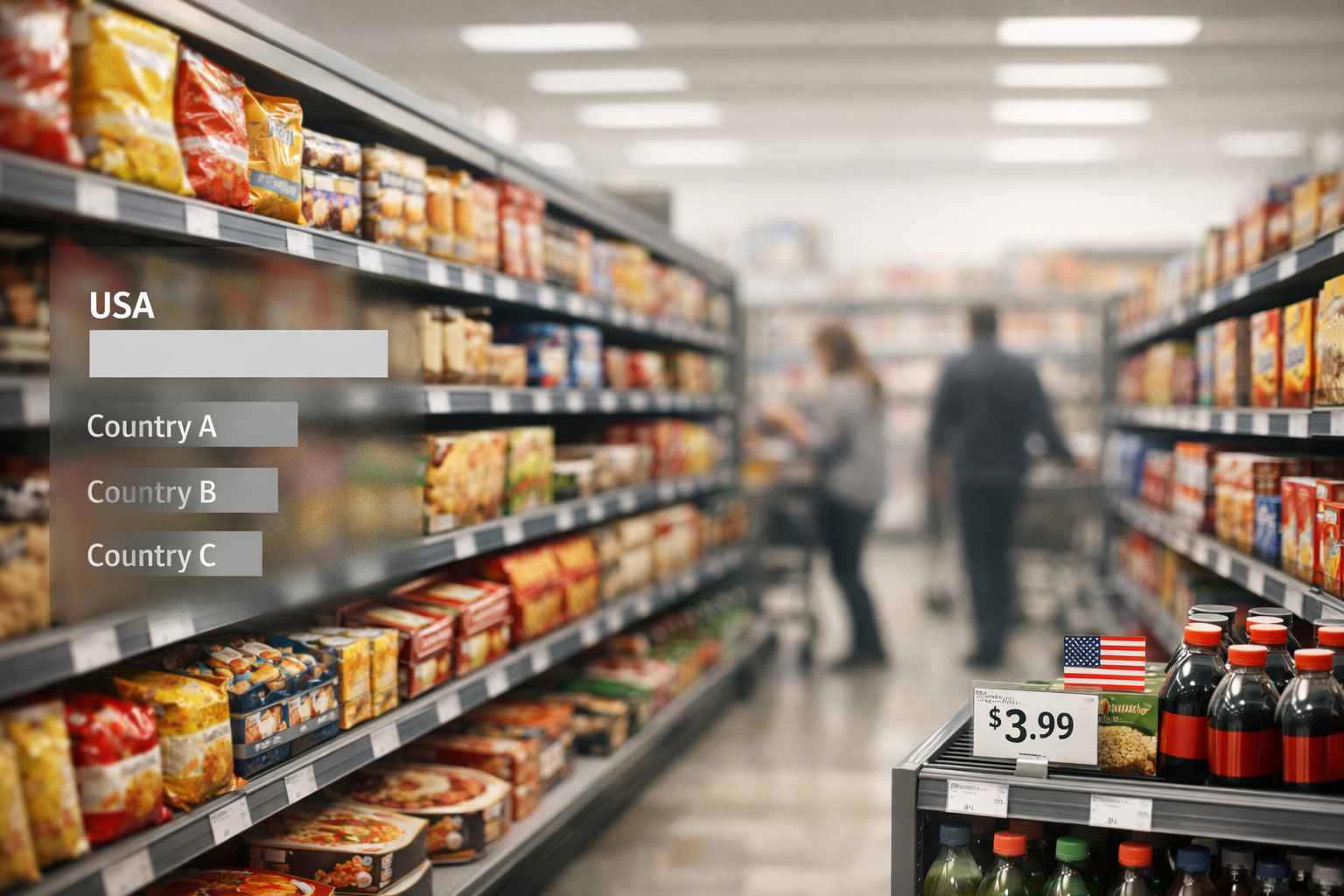
Across grocery aisles, quick meals, and convenience counters, ultra-processed foods (UPFs) are a defining feature of modern diets. Many readers notice the variety, convenience, and ubiquity of packaged snacks and ready-to-eat products in the United States and wonder: does the U.S. really consume more ultra-processed food than other countries? If so, why—and how much does that contribute to higher obesity rates? This article breaks down the evidence, the drivers behind the trend, and practical steps you can take as a consumer.
What counts as an “ultra-processed food”?
The term most commonly used in research is the NOVA classification. It groups foods by processing level rather than nutrient content. Ultra-processed foods are industrial formulations typically made from ingredients you wouldn’t use in a home kitchen—think refined starches, hydrogenated oils, sugar, emulsifiers, colorings, and a long list of additives. Examples include many soft drinks, packaged snacks, instant noodles, frozen ready meals, and mass-produced breads and breakfast cereals.
Is the U.S. diet higher in UPFs than other countries?
Short answer: generally, yes. Multiple international dietary surveys and comparative studies find that a larger share of daily calories in the United States comes from ultra-processed foods than in many other high-income and middle-income countries. The U.S. often ranks near the top for UPF consumption alongside countries such as the United Kingdom, Canada, and Australia.
That does not mean every American eats mostly UPFs—consumption varies by age, income, education, geography, and cultural background—but at a population level, the proportion of calories from UPFs in the U.S. is notably high.
Why is UPF consumption high in the United States?
The reasons are a mix of economic, social, technological, and cultural forces. Key drivers include:
- Food industry innovation and scale: The U.S. food sector is highly industrialized and invests heavily in research, product development, and supply chain optimization. This leads to a constant stream of affordable, shelf-stable, flavor-engineered products designed for convenience and long shelf life.
- Market structure and retail abundance: U.S. supermarkets tend to be larger with extensive shelf space and category variety compared to many countries. Big-box retailers and nationwide grocery chains create economies of scale that support a vast assortment of branded UPFs.
- Agricultural and economic policy: Subsidies and commodity crop policies (e.g., for corn and soy) lower the cost of key ingredients like high-fructose corn syrup and refined vegetable oils, which are foundational to many UPFs.
- Time pressures and convenience culture: Long work hours, commuting, and dual-income households increase demand for quick, ready-to-eat options. UPFs promise speed and predictability—attributes many busy consumers prioritize.
- Powerful marketing and cheap pricing: Aggressive advertising, strategic product placement, promotions, and low prices make UPFs attractive. Marketing budgets and behavioral tactics (portion sizing, flavors that trigger repeat buying) amplify consumption.
- Portion sizes and eating patterns: Larger portion norms, high-frequency snacking, and on-the-go eating in the U.S. favor packaged, single-serve products that are often ultra-processed.
- Regulation and labeling: The regulatory environment allows many processed formulations and additives. While there are labeling rules, they don’t always help consumers quickly identify processing level, and front-of-package claims can mislead.
Are U.S. supermarkets really more varied?
In many ways, yes. The average American grocery store offers thousands of SKUs across packaged categories. That variety results from a competitive retail landscape, private-label development, and segmentation strategies (organic, keto, gluten-free, etc.)—many of which are satisfied by UPFs reformulated to meet those niche demands.
“Shelf variety doesn’t necessarily mean healthier choices—often it means more processed options tailored to specific preferences and price points.”
How does UPF consumption relate to obesity in the U.S.?
Evidence links high UPF intake with increased calorie intake, poor diet quality, and higher risk of overweight and obesity. UPFs are engineered for palatability, often dense in added sugars, refined carbs, unhealthy fats, salt, and calories while being low in fiber and micronutrients—factors that promote overconsumption.
At a population level, the U.S. has higher adult and childhood obesity rates than many other high-income countries, and UPFs are a major contributing factor—not the only one. Physical activity patterns, socioeconomic disparities, urban design, sleep, stress, and healthcare access also play important roles.
Practical tips to reduce ultra-processed food intake
You don’t need a complete diet overhaul to lower UPF consumption. Small, sustainable changes are often most effective:
- Shop the perimeter: Focus on fresh produce, whole grains, lean proteins, dairy, and frozen plain vegetables. Reserve center-aisle trips for specific staples rather than impulse buys.
- Read ingredient lists: Fewer ingredients and recognizable names usually indicate less processing. If you can’t pronounce most ingredients, it’s probably ultra-processed.
- Cook with simple swaps: Choose whole fruit instead of fruit-flavored snacks, oatmeal or whole-grain toast instead of instant sugary cereals, and homemade sauces instead of packets.
- Batch prep for convenience: Make grain bowls, roasted vegetables, and portioned proteins on weekends to reduce reliance on ready meals during busy weekdays.
- Manage snacking smartly: Keep nuts, yogurt, cut veggies, and hard-boiled eggs handy instead of individually wrapped pastries and chips.
- Be mindful of marketing: “Natural,” “made with whole grains,” or “low-fat” labels don’t always mean minimally processed—check the ingredient list and nutrition facts.
Policy and systems-level solutions
Addressing high UPF consumption at scale requires policy action and industry accountability. Potential measures include:
- Economic incentives to make fresh foods more affordable (subsidies, SNAP incentives for fruits and vegetables).
- Stronger front-of-package labels that clearly show processing levels or critical nutrients like added sugar, sodium, and saturated fat.
- Marketing restrictions for children and limits on ultra-processed product placement in stores and near checkout aisles.
- Support for local food systems, smaller retailers, and community food programs that expand access to minimally processed foods.
Key takeaways
- The United States generally consumes a higher share of calories from ultra-processed foods than many other countries, driven by industry scale, retail abundance, commodity policies, and cultural factors emphasizing convenience.
- Higher UPF consumption is strongly associated with increased calorie intake and greater risk of obesity, though it’s one of several interacting causes.
- Practical individual strategies—reading labels, cooking simple meals, and choosing whole foods—can reduce UPF intake and improve diet quality without radical lifestyle changes.
- Population-level change requires policy shifts that make minimally processed foods more accessible, affordable, and visible.
Frequently asked questions
Q: Are all processed foods bad for you?
A: No. Processing exists on a continuum. Minimally processed foods (washed produce, bagged greens, roasted nuts) can be nutritious and convenient. The concern is specifically with ultra-processed foods that are engineered for shelf life, hyper-palatable taste, and low cost at the expense of nutrient quality.
Q: Can eating fewer UPFs help with weight loss?
A: Many studies show that reducing UPF intake improves diet quality and often leads to lower calorie intake, which can support weight loss. Pairing dietary changes with physical activity and other lifestyle adjustments is most effective.
Q: Are UPFs cheaper than whole foods?
A: Often, yes—especially when comparing per-calorie cost. Commodity-driven inputs and industrial production lower prices for many UPFs. That’s why policy interventions that subsidize whole foods or make them easier to access are important for equity.
Q: How can I tell if a product is ultra-processed?
A: Look for long ingredient lists, industrial additives (emulsifiers, colorants, flavorings), and ingredients you wouldn’t use in home cooking. Nutrition labels alone aren’t enough—check ingredients and processing cues.
Call to action
If you found this useful, subscribe for weekly evidence-based wellness tips and quick recipes that cut UPFs without sacrificing convenience. Browse our shop for practical kitchen tools and ready-to-use meal prep kits designed to make whole-food cooking faster—small changes add up.
Featured image suggestion: clean editorial hero image of a modern supermarket aisle with fresh produce in the foreground and packaged goods blurred in the background—modern, professional, and minimal.