
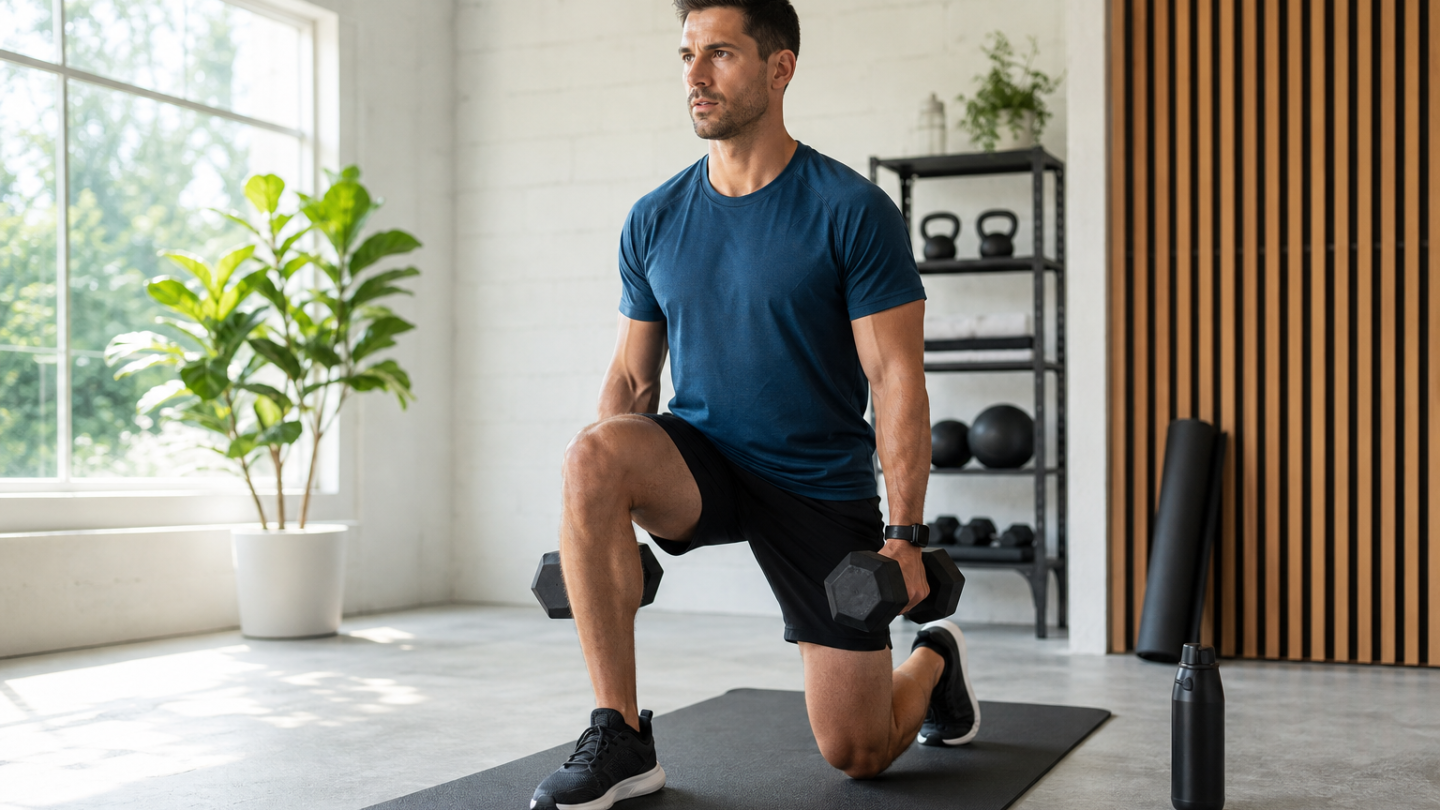
When life is full, fitness has to be realistic. A 20-minute strength workout will not solve every goal by itself, but it can do something very important: it can help you show up consistently.
Strength training does not need to be complicated to be useful. The goal is to train basic movement patterns, build confidence, and give your body a clear reason to stay strong. If you can repeat a simple plan two or three times per week, you are already moving in the right direction.
This workout is built for busy adults, beginners, and anyone returning to exercise after time away. Use it at home, in a gym, or wherever you have enough space to move. If you are new to exercise, managing pain, or returning after an injury, start gently and get guidance from a qualified professional when needed.
Why a 20-Minute Strength Workout Can Work
A shorter workout works when it is focused. Instead of trying to do every exercise you have ever seen, pick a few movements that train the body in useful ways.
A good 20-minute strength workout should include:
- a lower-body move
- an upper-body push
- an upper-body pull
- a hip hinge or glute move
- a core stability move
That covers most of what busy adults need for a practical session. It also keeps the workout simple enough to repeat. Repetition matters because fitness improves through consistent effort, not random intensity.
If consistency is the hardest part for you, read The Secret to Show Up. The same idea applies here: the best plan is the one you can return to again and again.
The 20-Minute Workout
Start with a light warm-up, then move through the five exercises below. Rest as needed, but keep the pace steady.
Warm-up: 3 minutes
- 30 seconds easy marching in place
- 30 seconds arm circles
- 30 seconds bodyweight good mornings
- 30 seconds hip circles
- 30 seconds easy squats or sit-to-stands
- 30 seconds relaxed breathing and posture reset
The warm-up should help you feel ready, not tired. Keep it smooth and comfortable.
Main workout: 15 minutes
Do three rounds of the following exercises. Use slow, controlled reps.
- Squat or chair sit-to-stand: 8 to 12 reps
- Incline push-up: 6 to 10 reps
- Hip hinge or glute bridge: 10 to 12 reps
- Band row, dumbbell row, or towel row: 8 to 12 reps
- Plank, dead bug, or standing march: 20 to 30 seconds
If three rounds feels like too much, complete two rounds and finish with confidence. If the workout feels too easy, slow the reps down, add light resistance, or add one extra round when your body is ready.
Cool down: 2 minutes
- slow breathing
- gentle hamstring stretch
- chest opener
- easy hip flexor stretch
You do not need a long cool down. You just need a simple transition that lets your body settle.
How Hard Should It Feel?
A smart workout should challenge you without forcing sloppy movement. For most busy adults, the sweet spot is a session that feels like a 6 or 7 out of 10 in effort.
That means:
- you are working
- your breathing increases
- the last few reps take focus
- you still feel in control
- you are not pushing through sharp pain
Strength training is not about proving how much discomfort you can tolerate. It is about training well enough to come back and do it again.
Why These Movements Matter
Each exercise in this workout has a purpose.
Squats and sit-to-stands build lower-body strength for daily movement. Getting up from a chair, climbing stairs, and moving with confidence all depend on strong legs. For more on that foundation, read Strong Legs, a Foundation to Move You.
Incline push-ups train the chest, shoulders, arms, and core without requiring the full difficulty of a floor push-up. A counter, bench, or sturdy table can make the move more accessible.
Hip hinges and glute bridges help train the backside of the body. This matters for posture, walking, lifting, and athletic movement.
Rows balance out pushing exercises and support better upper-body strength. Many people spend hours sitting, driving, or looking down at screens. Pulling work helps train the muscles that support a more upright position.
Core stability is about control. You do not need endless crunches. You need the ability to keep your trunk steady while your arms and legs move.
A Simple Weekly Plan
A good week does not need to be extreme. Try this schedule:
- Monday: 20-minute strength workout
- Tuesday: walk or light mobility
- Wednesday: 20-minute strength workout
- Thursday: walk, stretch, or rest
- Friday: 20-minute strength workout
- Weekend: outdoor movement, recovery, or active family time
If three strength days feels like too much, start with two. The goal is not to build the perfect week. The goal is to build a repeatable week.
How to Progress Without Overdoing It
Progress should be steady. You do not need to change everything at once.
Choose one progression at a time:
- add 1 or 2 reps per exercise
- add one extra round
- slow down the lowering phase
- use a slightly stronger band
- use light dumbbells
- reduce rest slightly while keeping form clean
If your form breaks down, pull back. Quality reps matter more than rushing through the clock.
Common Mistakes to Avoid
- Starting too hard. A workout that leaves you crushed can make consistency harder.
- Skipping warm-ups. A few minutes of preparation can improve how the session feels.
- Changing plans too often. Repeat the same workout for a few weeks before judging it.
- Ignoring recovery. Muscles need time and basic nutrition to adapt.
- Waiting for motivation. Put the session on your calendar and begin with the first rep.
Frequently Asked Questions
Can a 20-minute workout really help?
Yes, it can help when it is focused and repeated consistently. A short workout is especially useful when the alternative is skipping exercise completely.
Do I need equipment?
No. Bodyweight versions can work well. A resistance band or light dumbbells can add options, but they are not required to begin.
How many times per week should I do this?
Two or three times per week is a practical starting point for many adults. Leave space between strength days if your body needs recovery.
What if I only have 10 minutes?
Do the warm-up and one or two rounds. A shorter session still supports the habit. Showing up matters.
Key Takeaways
- A 20-minute strength workout can be useful when it is simple, focused, and repeatable.
- Train basic movement patterns: squat, push, hinge, pull, and core control.
- Keep effort challenging but controlled.
- Progress slowly by adding reps, resistance, or rounds over time.
- Consistency is the real win. Build the habit first.
Conclusion
You do not need a perfect schedule to get stronger. You need a practical starting point and a willingness to show up. A 20-minute strength workout gives you a simple way to train your body, build momentum, and keep fitness connected to real life.
Start where you are. Move with control. Repeat the plan. That is how strength becomes part of your lifestyle.
Call to Action
Like this article? Please share it. Also, register to follow LINKfit and receive our latest articles once a week. LINKfit – Show up.