Workout nutrition can get noisy fast. One person says timing is everything. Another says supplements are the answer. Someone else makes food sound like a set of strict rules.
For most active adults, the better starting point is simpler: protein, fiber, and hydration. Those three basics can support energy, recovery, meal quality, and consistency without turning nutrition into a full-time job.
This article is not medical nutrition advice. If you have a medical condition, food allergy, eating disorder history, or specific dietary need, work with a qualified healthcare professional or registered dietitian. For everyday fitness, though, the foundation can stay practical.
Why Simple Workout Nutrition Works
The goal of workout nutrition is not to eat perfectly. The goal is to give your body enough useful fuel to train, recover, and keep showing up.
A solid nutrition routine should help you:
- feel prepared for workouts
- recover between sessions
- build meals that keep you satisfied
- avoid constantly guessing what to eat
- support long-term consistency
That starts with the basics. Protein supports muscle repair and maintenance. Fiber helps meals feel more satisfying and usually comes from nutrient-rich foods. Hydration supports normal body function and helps you feel ready to move.
No single meal needs to be perfect. The pattern matters more.
Protein: Build Each Meal Around It
Protein is one of the most useful nutrients for active people because it helps support muscle repair and maintenance. That matters after strength training, walking, sports, yoga, or any routine that challenges your body.
A practical approach is to include a protein source at most meals.
Examples include:
- eggs
- Greek yogurt
- chicken or turkey
- fish
- lean beef
- tofu or tempeh
- beans and lentils
- cottage cheese
- protein smoothies when whole-food options are not practical
If you want more detail on timing, read Protein After Workout: Is Timing Really Important?. The short version: timing can matter, but total daily intake and consistency matter too.
Fiber: Make Meals More Complete
Fiber is often overlooked in fitness conversations, but it can make a major difference in how meals feel. Foods that contain fiber can help meals feel more filling and balanced.
Fiber-rich options include:
- berries
- apples and pears
- oats
- beans and lentils
- vegetables
- whole grains
- nuts and seeds
- avocado
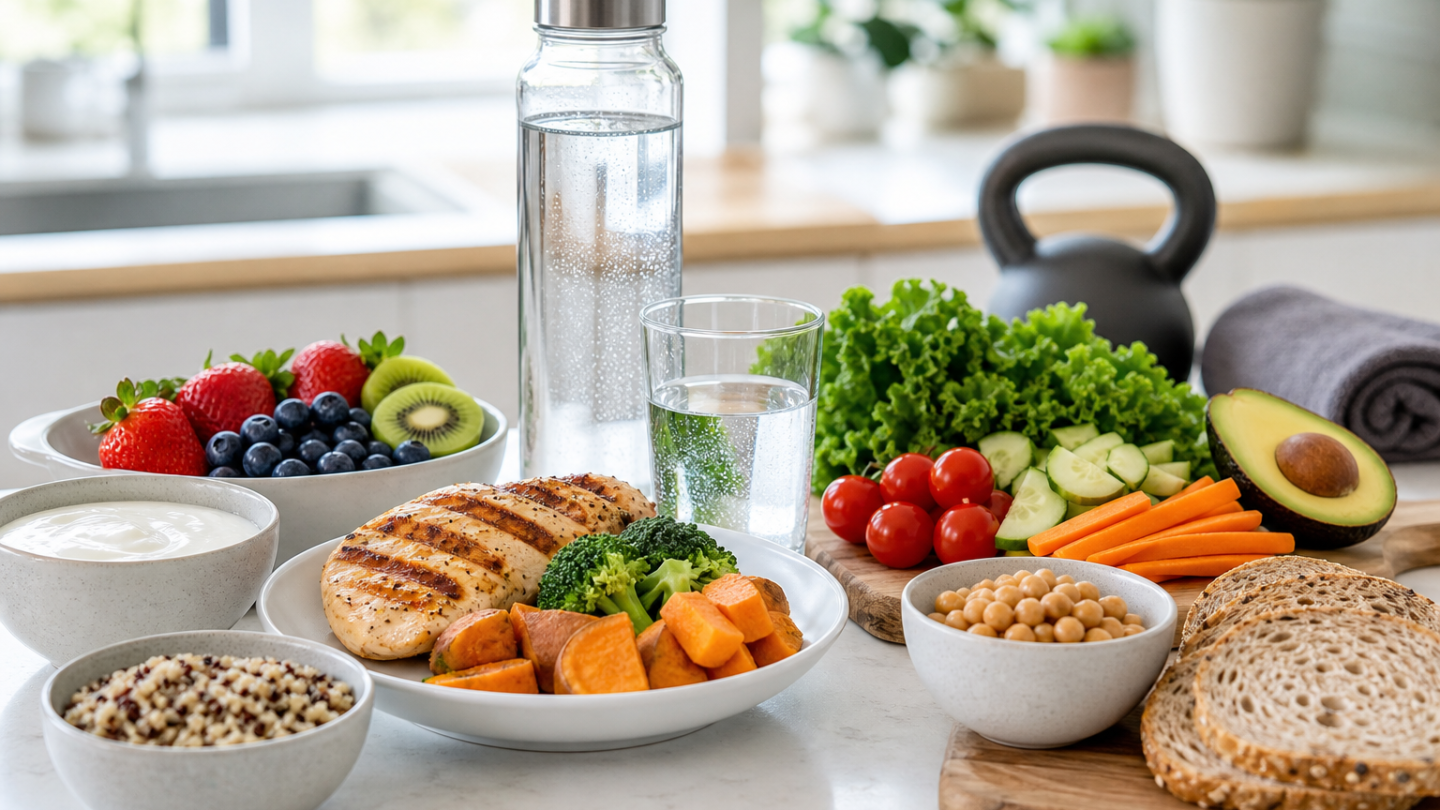
A simple plate might include protein, a colorful plant food, and a high-fiber carbohydrate. That could be eggs with oats and berries, chicken with rice and vegetables, or salmon with potatoes and a salad.
The goal is not to make every meal fancy. The goal is to build a plate that supports your day.
Hydration: Start Before You Feel Behind
Hydration does not need to be complicated either. Many people wait until they feel thirsty, tired, or distracted before thinking about water. A better strategy is to build a simple routine.
Try this:
- drink water after waking up
- keep a bottle nearby during work
- drink before and after training
- add electrolytes when sweating heavily or training in heat, if appropriate for you
- use urine color as a general awareness tool, not an obsession
Coffee, tea, fruits, vegetables, soups, and other fluids can contribute to hydration too. Water is still the easiest place to start.
What to Eat Before a Workout
Pre-workout food depends on timing, workout intensity, and what your stomach handles well. Keep it simple.
If you are eating 2 to 3 hours before training, try a normal balanced meal:
- chicken, rice, and vegetables
- eggs, toast, and fruit
- Greek yogurt, oats, and berries
- turkey sandwich with fruit
If you are eating 30 to 60 minutes before training, choose something lighter:
- banana
- toast with peanut butter
- small yogurt
- smoothie
- fruit and a small handful of nuts
You do not need a heavy meal right before movement. You need enough fuel to feel steady.
What to Eat After a Workout
After training, think about rebuilding a normal meal rather than chasing perfection. Include protein, some carbohydrate, and fluids.
Post-workout examples:
- fish tacos with cabbage and salsa
- chicken bowl with rice, beans, and vegetables
- Greek yogurt with berries and granola
- eggs with potatoes and fruit
- tofu stir-fry with noodles or rice
Fish can be an especially useful protein option for many diets. For more ideas, read Fish and Protein: The Best Fish for a High-Protein Diet.
A Simple Plate Formula
When you do not know what to eat, use this basic plate formula:
- Protein: one palm-sized portion or a practical serving for your body and goals
- Fiber-rich carbohydrate: oats, rice, potatoes, beans, fruit, or whole grains
- Color: vegetables or fruit
- Healthy fat: avocado, olive oil, nuts, seeds, or fatty fish
- Fluid: water or another low-sugar option that works for you
This formula is flexible. It can fit home cooking, leftovers, restaurants, and quick meals.
Do Supplements Matter?
Supplements can be useful for some people, but they should not replace the basics. Before spending energy on powders, pills, or advanced timing strategies, ask yourself:
- Am I eating protein consistently?
- Am I getting fruits, vegetables, beans, or whole grains most days?
- Am I drinking enough fluid for my activity level?
- Am I sleeping and recovering enough to support training?
If those basics are missing, supplements are not the first problem to solve.
Nutrition and Consistency
The best nutrition plan is one you can repeat. That means your food should fit your schedule, budget, preferences, culture, and goals.
Try building a few reliable meals:
- a breakfast you can make in five minutes
- a lunch that travels well
- a post-workout meal you actually enjoy
- a high-protein snack for busy days
- a simple dinner template you can rotate
Repeatable meals reduce decision fatigue. That makes it easier to stay consistent with training and healthy habits.
Frequently Asked Questions
Do I need to eat before every workout?
Not always. Some people feel fine training after a normal meal earlier in the day. Others need a light snack. Pay attention to energy, digestion, and workout quality.
How soon should I eat after training?
You do not need to panic about the clock. Eating a balanced meal within a reasonable window after training is a practical approach for most people.
Is protein powder necessary?
No. Protein powder can be convenient, but whole-food protein sources work well too. Use convenience when it helps; do not treat it as required.
What is the easiest nutrition habit to start?
Start by adding protein to breakfast or drinking water earlier in the day. One simple habit can create momentum for the next one.
Key Takeaways
- Simple workout nutrition starts with protein, fiber, and hydration.
- Protein supports muscle repair and maintenance.
- Fiber-rich foods help make meals more complete and satisfying.
- Hydration works best as a routine, not an afterthought.
- Consistency matters more than perfect timing or complicated rules.
Conclusion
You do not need a complicated nutrition system to support better training days. Start with protein, fiber, and hydration. Build meals you can repeat. Keep your routine practical enough to survive busy weeks.
The goal is not to eat perfectly. The goal is to fuel the life you want to keep showing up for.
Call to Action
Like this article? Please share it. Also, register to follow LINKfit and receive our latest articles once a week. LINKfit – Show up.