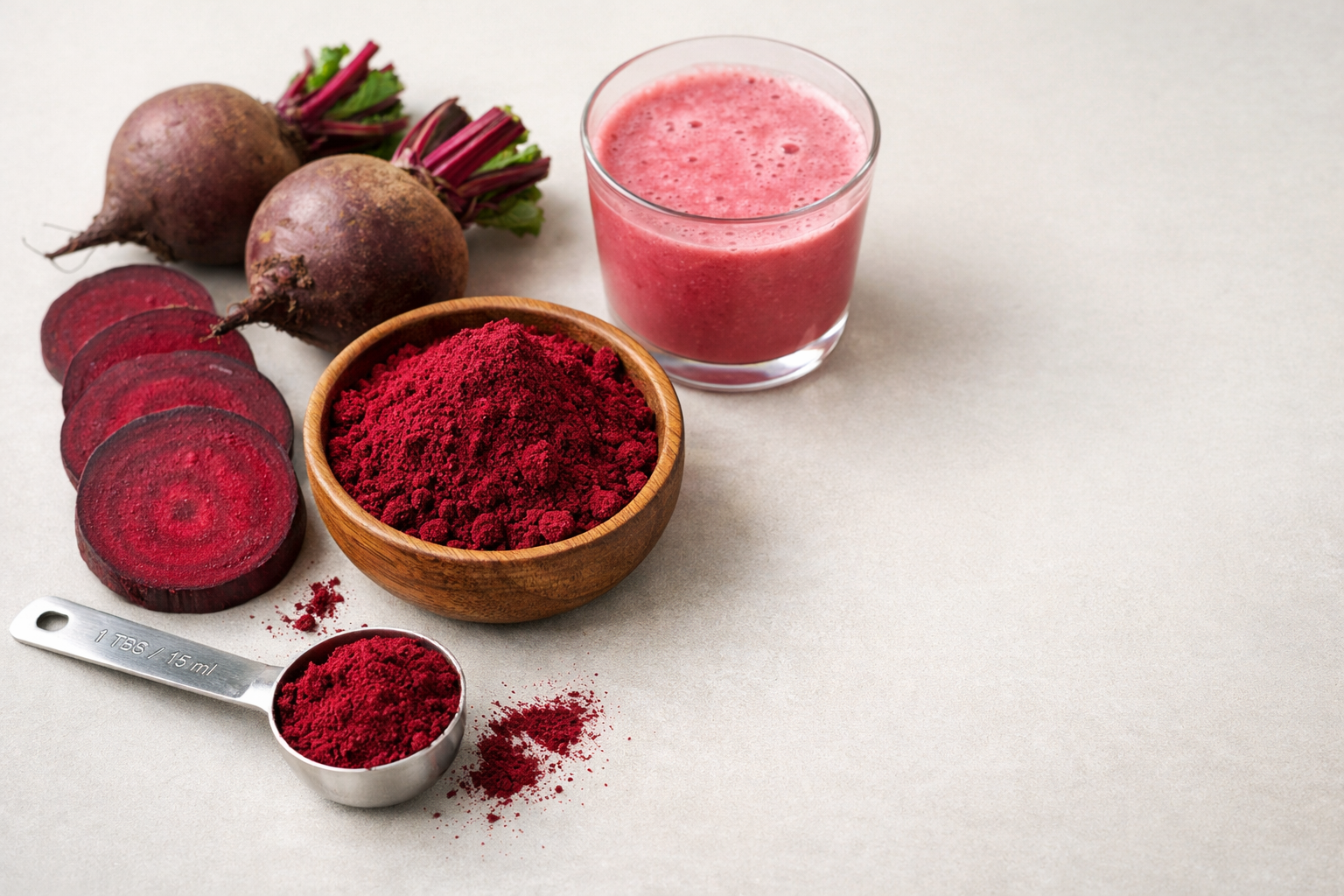
Beetroot powder has moved from niche health-food shelves into the routines of runners, busy professionals, and everyday cooks. Ground from dehydrated beets, this concentrated powder delivers many of the vegetable’s nutrients in a shelf-stable, easy-to-use form. In this article we’ll cover the evidence-backed benefits, practical ways to use beetroot powder beyond smoothies, simple recipe ideas, tips for choosing a quality product, and safety considerations so you can add it to your routine with confidence.
Why beetroot powder? Key benefits
Beetroot’s appeal comes from a few nutritional components that remain active in powder form:
- Dietary nitrates: These convert into nitric oxide in the body, which can support healthy blood flow and may help lower blood pressure modestly.
- Antioxidants: Pigments like betanin provide antioxidant and anti-inflammatory support.
- Vitamins and minerals: Beetroot powder supplies small amounts of potassium, folate, and iron-like nutrients depending on the product.
Research highlights include modest improvements in exercise performance (endurance and time-to-exhaustion) when dietary nitrate intake is increased, and small reductions in systolic blood pressure in some studies. That said, beetroot powder is not a medication — think of it as a food-based strategy to support circulation, recovery, and overall nutrition.
Who benefits most?
Beetroot powder is commonly used by:
- Recreational and endurance athletes looking for a natural performance boost
- Adults aiming to support healthy blood pressure or circulation
- Anyone wanting an easy vegetable-derived boost to smoothies, baking, or snacks
Practical ways to use beetroot powder (beyond smoothies)
Smoothies are the most common use, but beetroot powder is very versatile. Below are practical, everyday ideas that are simple to build into your meals.
Mixing and measuring tips
- Typical serving: Start with 1 teaspoon (about 3–5 g) and adjust to taste or follow the product’s serving advice. Some performance supplements use larger, standardized doses—check the label.
- Prevent clumps: Mix the powder into a little warm water or milk to form a paste before adding to thicker batters or doughs.
- Stain warning: Beet powder stains surfaces, clothes, and cutting boards—work carefully.
- Storage: Keep in a cool, dry place in an airtight container to preserve color and potency.
Everyday foods and recipes using beetroot powder
1. Oatmeal and porridge
Add 1 teaspoon to your morning oats while cooking or stir into overnight oats for color, mild sweetness, and nutrients. Pair with cinnamon, vanilla, and a squeeze of citrus to brighten flavor.
2. Yogurt bowls & parfaits
Stir a teaspoon into plain or Greek yogurt, then top with granola, fresh fruit, and nuts. The tang of yogurt balances beet’s earthiness.
3. Pancakes and waffles
Substitute 1–2 teaspoons of beet powder into pancake batter for color and a subtle earthy-sweet note. Try with cocoa powder or cinnamon for a flavor boost.
4. Beet latte (hot or iced)
- Whisk 1 tsp beetroot powder with a little hot water to dissolve.
- Add warmed milk (dairy or plant) and a dash of honey or maple syrup.
- Top with cinnamon or a small amount of cocoa nibs.
This makes a naturally pink, caffeine-free specialty drink.
5. Salad dressings and dips
Whisk 1 tsp beet powder into vinaigrette or a yogurt-based dressing for color and a hint of sweetness. It also blends well into hummus for a bright dip.
6. Baking (muffins, breads, energy bars)
Use beet powder in quick breads, muffins, or homemade energy bars—1–2 teaspoons adds color and flavor without changing texture significantly. Combine with chocolate or citrus to complement the beet flavor.
7. Pasta, doughs, and sauces
Incorporate beet powder into fresh pasta dough or gnocchi for color and mild flavor. Stir into tomato sauces for depth and color variation.
8. Seasoning blends and rubs
Mix beet powder into spice rubs with smoked paprika, garlic powder, salt, and pepper for a colorful rub on roasted vegetables or meats (note that cooking reduces some nitrate content).
Practical pairing tip: Beet’s natural earthiness pairs well with citrus (lemon, orange), ginger, cinnamon, cocoa, goat cheese, and saltier flavors like soy or miso.
Simple recipe: Beet + cocoa energy bites (no-bake)
Quick, portable, and kid-friendly.
- Ingredients: 1 cup rolled oats, 1/2 cup nut butter, 2 tbsp honey or maple syrup, 1 tbsp cocoa powder, 1 tsp beetroot powder, pinch of salt.
- Method: Mix ingredients, roll into balls, chill 20–30 minutes. Store refrigerated up to a week.
Choosing a quality beetroot powder
When shopping, look for these markers of quality:
- Ingredient list: Pure beetroot powder or organic beetroot—no unnecessary fillers, sugars, or artificial colors.
- Processing: Low-temperature dehydration helps preserve pigment and nutrients.
- Certifications: Organic certification if you prefer fewer pesticides; third-party testing for contaminants is a plus.
- Customer reviews: Taste and solubility can vary—check recent user feedback for texture and flavor notes.
Popular, well-reviewed options to consider:
- BulkSupplements Pure Beet Root Powder: Budget-friendly, widely available, good for everyday use and baking.
- Terrasoul Superfoods Organic Beet Root Powder: Organic, well-rated for flavor and color intensity.
- Navitas Organics Beet Powder: Known for clean sourcing and good solubility in drinks.
- Organic Traditions Organic Beet Root Powder: Often praised for a fuller flavor profile—suitable for culinary uses.
- BeetElite (performance-focused): Marketed for athletes and endurance use; formulated for higher nitrate content—follow label dosing.
Always read the label for serving size and any performance claims. If you have medical conditions or take medications, check with a healthcare professional before starting regular use.
Safety and interactions
- Blood pressure: Beetroot can lower blood pressure in some people. If you take antihypertensive medication, monitor blood pressure and talk with your clinician.
- Nitrate interactions: If you take prescription nitrates (for chest pain) or PDE-5 inhibitors, consult your provider—though food nitrates are different, it’s best to verify safety.
- Kidney stones: Beets are high in oxalates; if you have a history of oxalate kidney stones, discuss with your doctor.
- Urine/stool color: Beet pigments can turn urine or stool pink/red—this is harmless but can be surprising.
Key takeaways
- Beetroot powder provides dietary nitrates and antioxidants that may support circulation, exercise performance, and recovery.
- It’s versatile—use it in more than smoothies: oatmeal, yogurt, baking, lattes, dressings, and seasoning blends.
- Start with small servings (1 tsp) and follow product guidance; choose high-quality, minimally processed powders.
- Check with a healthcare provider if you have medical conditions or take medications that affect blood pressure or circulation.
FAQ
Is beetroot powder as effective as drinking beet juice?
Both provide beet-derived nitrates and antioxidants, but nitrate concentration varies by product and processing. Some powdered supplements are standardized for nitrate content (often marketed for athletes), while whole-food powders may have lower but still meaningful levels. Check labels and dosing recommendations.
Will beetroot powder stain my clothes or teeth?
Yes—beet pigment is strong and can stain clothing, countertops, and sometimes teeth temporarily. Rinse promptly if you spill, and use a straw for drinks if staining is a concern.
How much should I take for exercise benefits?
Studies use a range of doses and often standardize nitrate content rather than powder weight. For general use, start with 1 teaspoon daily and follow product guidance. If you’re targeting performance, look for products that disclose nitrate content and consult product protocols or a sports nutritionist.
Can I cook with beetroot powder without losing benefits?
Cooking reduces some nitrates, but many culinary uses still provide color, flavor, and antioxidant compounds. If your primary goal is nitrate intake for performance, use a mix of raw/low-heat preparations and cooked foods.
Call to action
Ready to try beetroot powder? Start small—add a teaspoon to your next smoothie or yogurt bowl. If you want curated options tested for taste and quality, check our shop for LINKfit-approved powder picks and starter bundles designed for everyday athletes and active adults.