When people hear the word sprints, they often picture elite athletes blasting down a track. But short sprints do not belong only in competitive sport. When used wisely, they can be one of the most efficient ways to improve health, fitness, and everyday performance at almost any age. A few seconds of fast effort, followed by full recovery, can deliver benefits that go far beyond burning calories.
For busy adults, golfers, former athletes, and beginners looking to regain fitness, short sprints can be a powerful tool. They help train the heart, lungs, muscles, bones, and nervous system in a way that is time-efficient and highly effective. Even better, they can be adapted to your current ability level so you can build fitness without needing long, complicated workouts.
What Counts as a Short Sprint?
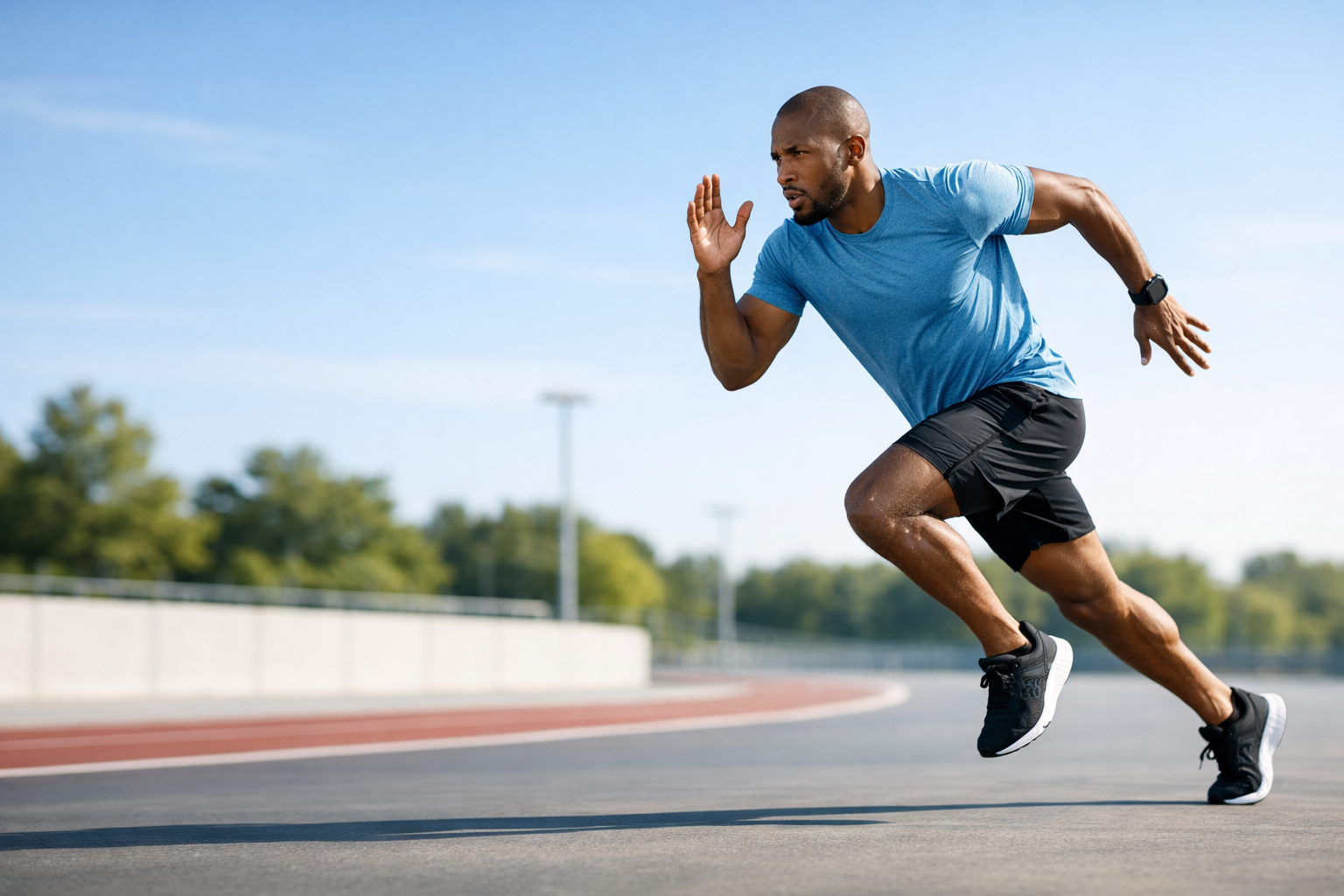
A short sprint is a brief burst of high-intensity effort, usually lasting anywhere from 5 to 20 seconds, followed by a recovery period. The goal is not to stay at top speed for long. The goal is to move fast, powerfully, and with good form, then recover before repeating.
Sprints do not have to mean running on a track. They can include:
- Hill sprints
- Stationary bike sprints
- Rowing machine intervals
- Pool sprints
- Shuttle runs
- Fast uphill walking or incline treadmill bursts
That flexibility is one of the reasons short sprints can work for so many people. The movement can be adjusted to fit fitness level, joint comfort, and training goals.
Why Short Sprints Deliver Big Benefits
1. They Boost Metabolism and Support Fat Loss
Short sprints are intense enough to create a strong metabolic demand in a very short amount of time. This means your body uses a lot of energy during and after the session. The post-workout recovery process also requires calories, which can increase total daily energy expenditure.
That does not mean sprints are magic. Fat loss still depends on overall nutrition, sleep, stress management, and consistency. But sprints can be a very useful tool because they help preserve or build lean tissue while supporting higher calorie burn. For many people, that makes them easier to sustain than long, exhausting cardio sessions.
2. They Support Muscle Development and Toning
Short sprints challenge the muscles of the legs, hips, glutes, and core in a powerful way. The forceful push-off, rapid arm drive, and quick turnover all require muscle recruitment. Over time, this can improve muscle tone and help develop stronger, more athletic-looking legs and hips.
For people who want to look fitter and move better, this matters. Sprints can complement strength training by improving explosive power and helping the body stay responsive. They are not a replacement for lifting weights, but they can be an excellent addition to a balanced training plan.
3. They Improve Cardiovascular Health and VO2 Max
One of the biggest benefits of sprint training is its effect on the heart and lungs. High-intensity intervals challenge the cardiovascular system in a way steady-state exercise often does not. This helps improve the body’s ability to deliver and use oxygen efficiently.
That’s where VO2 max comes in. VO2 max is a measure of how well your body can take in and use oxygen during exercise. A better VO2 max is linked to improved endurance, better overall fitness, and healthier aging. Short sprint sessions can help improve this important marker without requiring long workout blocks.
In practical terms: if your heart and lungs become more efficient, everyday tasks feel easier, exercise feels less draining, and you recover faster between efforts.
4. They Can Improve Insulin Sensitivity and Metabolic Health
Sprints help muscles use glucose more effectively, which can improve insulin sensitivity. In simple terms, this means your body may handle blood sugar better after training. Better insulin sensitivity is associated with improved metabolic health and a lower risk of many lifestyle-related problems.
This is one reason sprint intervals are often appealing for people who want to improve health markers without spending hours in the gym. A few quality sessions each week can create meaningful metabolic stimulus, especially when paired with a nutrient-dense diet and regular movement throughout the day.
5. They Can Increase Bone Mineral Density
Bones respond to stress. When you move quickly and load the body with impact, the skeleton receives a signal to adapt. Sprinting creates that kind of stimulus in a way that low-impact exercise may not.
Over time, this can help support bone mineral density, which becomes increasingly important as we age. Stronger bones help reduce injury risk and support long-term mobility. For older adults, this is one of the reasons sprint-style training, when modified appropriately, can be especially valuable.
6. They Improve Neuromuscular Efficiency
Short sprints train the connection between the nervous system and the muscles. This is called neuromuscular efficiency. In everyday language, it means your brain gets better at telling your body how to move quickly, smoothly, and forcefully.
That can lead to better coordination, quicker reaction time, improved power, and more confident movement. For golfers, this matters because better sequencing and force transfer can support more athletic movement patterns. For everyone else, it helps with balance, speed, and physical confidence in daily life.
Why Short Sprints Help All Age Groups
One of the most useful things about sprint training is that it can be scaled. A young adult may do fast track sprints. A middle-aged adult may choose bike intervals. An older adult may use hill walking bursts, rowing intervals, or short acceleration drills on soft ground. The mechanism is similar: brief high effort, followed by recovery.
For Beginners
Short sprints can be introduced gradually, starting with low volume and controlled effort. This helps build confidence and avoids the mistake of doing too much, too soon. Even two or three short intervals can be enough to start improving conditioning.
For Former Athletes
Many former athletes miss the feeling of speed and power but are not ready for the volume they used to handle. Short sprints provide a way to reconnect with athletic movement while respecting recovery and life demands. They can also help restore fitness more efficiently than long, slow workouts alone.
For Adults Over 40, 50, and Beyond
As we age, we naturally lose some speed, power, muscle, and bone density unless we train them. Short sprints can help maintain these qualities. The key is to choose the right version for your body and current fitness level. For some people, that means a fast 10-second incline walk. For others, it may be a controlled sprint on a bike or a gentle hill.
The benefit for all ages is the same: train the body to be strong, responsive, and resilient.
How to Add Short Sprints to Your Week
Start small and focus on quality. Sprint sessions are meant to be short, not draining. If you are new to this style of training, one or two sessions per week is plenty.
A Simple Beginner Sprint Session
- Warm up for 8 to 12 minutes with easy walking, cycling, or mobility work.
- Perform 4 to 6 short efforts of 5 to 10 seconds at a strong but controlled pace.
- Recover fully for 60 to 120 seconds between efforts.
- Cool down with easy movement and light stretching.
If you feel too breathless to keep good form, the effort was probably too hard or the recovery too short. With sprint work, it is better to finish feeling strong than exhausted.
Good Sprint Options by Ability
- Walking or mobility-focused beginners: brisk uphill walks, bike bursts, or rowing intervals
- Active adults: hill sprints, sled pushes, shuttle runs, track accelerations
- Experienced exercisers: higher-intensity intervals with longer strides or sport-specific drills
Important Safety Tips
Sprints are powerful, which means they should be approached with respect. If you are returning after a long break, managing joint pain, or dealing with cardiovascular concerns, start conservatively and consider checking with a healthcare professional before beginning a new high-intensity program.
Keep these principles in mind:
- Warm up thoroughly before every session.
- Use full recovery between sprints.
- Choose a surface and movement that feel stable and safe.
- Stop if your form breaks down.
- Progress slowly by adding one interval, not by forcing more speed immediately.
For many people, sprinting on a hill or bike is a smarter starting point than flat-out running. These options reduce impact while still delivering the training effect.
How Short Sprints Fit Into a Balanced Lifestyle
The best fitness plan is the one you can maintain. Short sprints work well because they are time-efficient, adaptable, and effective. They can sit alongside walking, strength training, yoga, mobility work, golf practice, or recreational sport.
That makes them especially valuable for people who want a healthy, balanced lifestyle rather than an extreme approach. You do not need to sprint every day. In fact, you should not. But adding a small amount of high-quality sprint work to an otherwise well-rounded routine can raise your fitness ceiling in a meaningful way.
For golfers, the payoff may include better rotational power, faster ground contact, and improved recovery between rounds. For general health, the payoff may be better conditioning, body composition, and energy. For older adults, the payoff may be maintaining independence, speed, and confidence in movement.
Key Takeaways
- Short sprints are a time-efficient way to improve fitness at many ages.
- They can help boost metabolism, support fat loss, and preserve lean muscle.
- Sprint training can improve cardiovascular health and VO2 max.
- It may also support insulin sensitivity and overall metabolic health.
- When done safely, sprint work can help improve bone density and neuromuscular efficiency.
- There are many ways to sprint, including hills, bikes, rowing, and short accelerations.
- The best results come from good form, proper recovery, and consistent weekly practice.
FAQ
Are short sprints safe for beginners?
Yes, if they are introduced gradually and modified to your fitness level. Beginners should start with low volume, full recovery, and lower-impact options such as hill walking bursts or bike sprints.
How many sprint sessions should I do each week?
Most people do well with one to two sessions per week. Because sprinting is demanding, quality and recovery matter more than frequency.
Do I need to run to get the benefits of sprint training?
No. You can get many of the same benefits from biking, rowing, hill walking, sled pushes, or other fast interval-based movements.
Can older adults do sprint workouts?
Yes, with the right modifications. Older adults often benefit from shorter efforts, longer recovery, and lower-impact tools like inclines, bikes, or rowing machines.
Will sprints replace strength training?
No. Sprinting and strength training complement each other. Strength training builds foundational muscle and resilience, while sprinting adds speed, power, and cardiovascular stimulus.
How long does a sprint workout need to be?
Very short. Including warm-up and cool-down, many sprint workouts last only 15 to 25 minutes. That efficiency is one of their biggest advantages.
Final Thought
Short sprints are a simple idea with powerful benefits. They can help improve fitness, metabolism, muscle tone, bone health, cardiovascular capacity, and movement quality without demanding hours of training. Whether you are a beginner, a former athlete, a golfer looking for more power, or someone who simply wants to feel better in daily life, sprint training may be one of the smartest additions you make.
Start conservatively, stay consistent, and focus on good movement. A few well-executed sprints can go a long way.
Call to Action
Like this article? Please share it. Also, register to follow LINKfit and receive our latest articles once a week. LINKfit – Show up.