
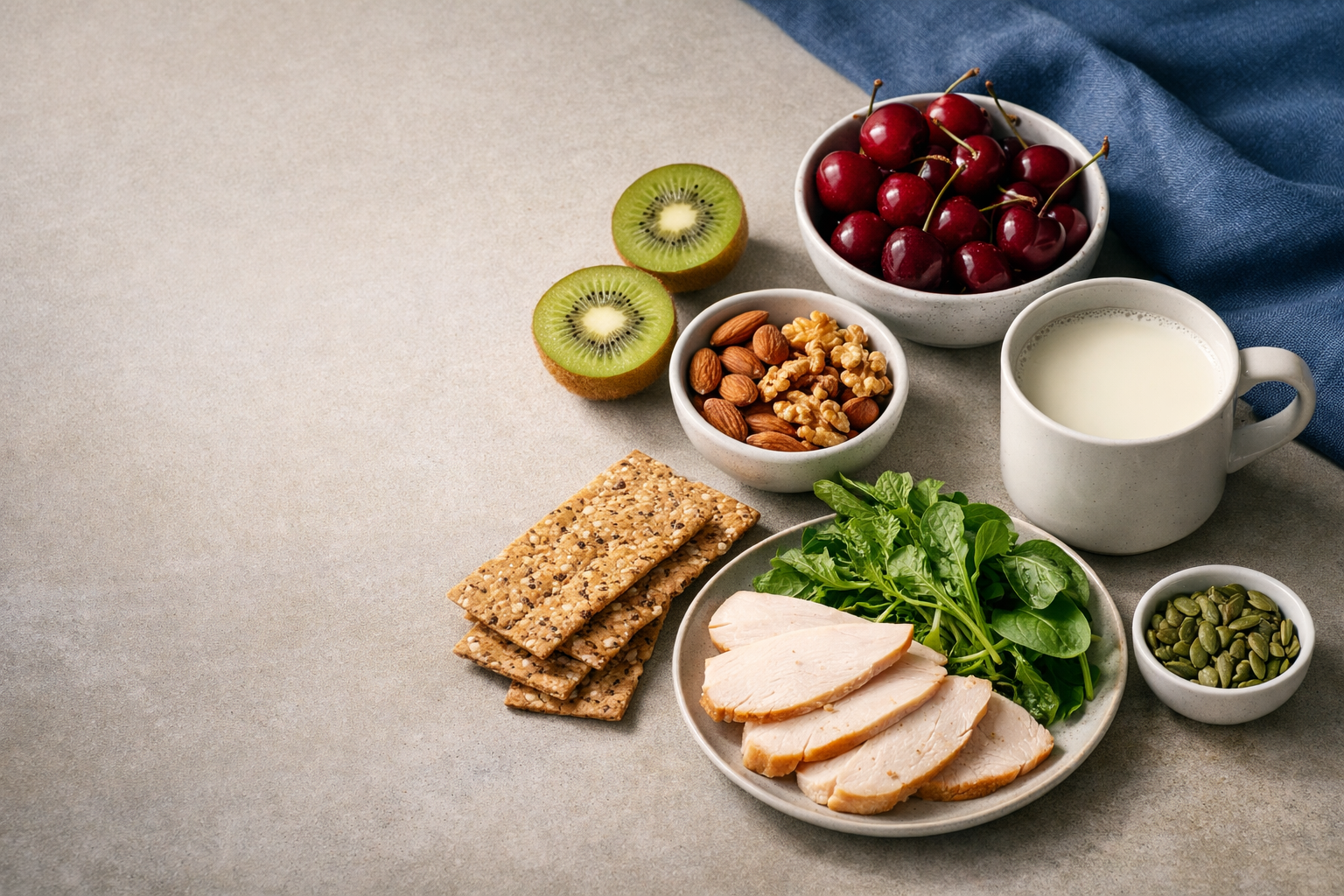
What you eat — and when you eat it — matters for sleep. Nutrients and food patterns influence the hormones and neurotransmitters that control sleep onset, depth, and the balance of sleep stages. With a few simple choices and timing strategies you can nudge your body toward faster sleep onset, fewer night wakings, and more restorative sleep. Below is a practical, evidence-informed guide to foods and drinks that help sleep, those to avoid, and how to use meal timing and portions to support better rest.
How food affects sleep: the basic physiology
Several pathways link diet to sleep:
- Tryptophan and serotonin/melatonin synthesis: The amino acid tryptophan is a precursor to serotonin and melatonin, two key sleep-regulating compounds. Foods higher in tryptophan can support production of these molecules when combined with carbohydrates that help tryptophan reach the brain.
- Micronutrients: Magnesium, calcium, and vitamin B6 play roles in neurotransmitter balance and muscle relaxation. Deficiencies can disturb sleep.
- Blood sugar and insulin: High-sugar meals and refined carbs create glucose swings that can fragment sleep or trigger nocturnal awakenings.
- Stimulants and sleep architecture: Caffeine blocks adenosine, delaying sleepiness. Alcohol can shorten sleep latency but fragments sleep later and reduces REM sleep.
Foods and drinks that promote better sleep — and why
Tryptophan-rich foods
Tryptophan helps the body make serotonin and melatonin. Include moderate portions of:
- Poultry: Turkey and chicken are familiar examples.
- Dairy: Milk, yogurt, and cottage cheese — a warm glass of milk is a time-tested option.
- Eggs: Versatile and nutrient-dense sources of tryptophan.
- Legumes and soy: Chickpeas, lentils, tofu and tempeh.
Natural melatonin sources
Certain foods contain melatonin or stimulate its production:
- Tart cherries and tart cherry juice: Contain melatonin and have been associated with improved sleep duration in some studies.
- Walnuts: Modest melatonin content plus healthy fats.
- Grapes and berries: Some contain small amounts of melatonin.
Magnesium- and calcium-rich options
Magnesium promotes muscle relaxation and supports GABA (an inhibitory neurotransmitter). Calcium helps the brain use tryptophan to make melatonin. Good choices include:
- Almonds and pumpkin seeds (magnesium)
- Leafy greens like spinach (magnesium and calcium)
- Dairy products (calcium)
- Fatty fish like salmon (magnesium, plus omega-3s which may support sleep)
Complex carbohydrates and low-GI grains
A small evening portion of whole grains or starchy vegetables can help by increasing insulin mildly and improving uptake of competing amino acids, allowing tryptophan better access to the brain. Choose:
- Oats, quinoa, brown rice, whole-grain toast
- Sweet potatoes, winter squash
Soothing herbal drinks
Non-caffeinated herbal teas that are often used for sleep include chamomile, lemon balm, and valerian (use cautiously and consult a provider before long-term valerian use). These may promote relaxation though effects vary by person.
Foods and drinks that hinder sleep — what to avoid and why
Caffeine and other stimulants
Caffeine blocks adenosine and can stay active in your body for many hours. Avoid coffee, many teas, matcha, energy drinks, and chocolate within about 6–8 hours of your planned bedtime. Sensitive individuals may need an even longer cut-off.
Alcohol
Alcohol can make you fall asleep faster, but it disrupts sleep later in the night. It reduces REM sleep, fragments deep sleep, increases wakefulness in the second half of the night, and can worsen sleep apnea and snoring. For consistent, restorative sleep, avoid relying on alcohol as a sleep aid and limit intake in the evening.
Large, fatty, or spicy meals
High-fat or spicy meals slow gastric emptying and raise the risk of reflux or heartburn, which commonly awaken people at night. Heavy meals close to bedtime are strongly associated with poorer sleep quality.
High-sugar or refined-carb snacks
Sugary foods and refined carbs create blood sugar spikes and crashes that can trigger nighttime awakenings or restless sleep. They may also increase nighttime cortisol in some people.
Excess fluid
Drinking large volumes of fluid in the hour before bed increases the chance of nocturia (waking to urinate), which fragments sleep. Limit fluids 60–90 minutes before bedtime if nocturia is a problem.
Timing and portion guidance
- Large meals: Finish big dinners 2.5–3 hours before bed when possible to reduce reflux and metabolic activity.
- Light evening snack: If you need something closer to bedtime, keep it small (150–250 calories) and combine a carbohydrate with a protein or small amount of fat — for example, whole-grain crackers with cheese or Greek yogurt with berries.
- Hydration: Stay hydrated throughout the day; cut down on fluid intake 60–90 minutes before sleep.
Practical evening meal and snack ideas
- Grilled salmon, roasted sweet potato, and steamed broccoli (omega-3s, magnesium, complex carbs)
- Turkey or tofu stir-fry with brown rice and mixed vegetables
- Greek yogurt with a small handful of walnuts and a few tart cherries
- Whole-grain toast with almond butter and banana slices
- Warm milk or chamomile tea with a teaspoon of honey (if desired) — small, comforting beverage
Special considerations
If you take medications, have GERD, sleep apnea, diabetes, or other chronic conditions, certain foods or supplements may interact with treatment or affect symptoms. For example, alcohol and sedating medications can dangerously increase sleepiness; high-sugar meals complicate glucose control. Talk with your healthcare provider for personalized guidance.
Key takeaways
- Choose tryptophan-containing proteins, magnesium- and calcium-rich foods, and low-GI carbohydrates to support sleep-promoting hormones.
- Avoid late caffeine, limit alcohol in the evening, and minimize heavy, spicy, or high-sugar meals before bed.
- Finish large meals 2–3 hours before bedtime; if you need a snack closer to sleep, keep it small and balanced.
- Consistent meal timing and mindful portions are as important as which foods you choose.
FAQ
Does alcohol help me sleep?
Alcohol may help you fall asleep faster, but it disrupts sleep architecture, increases awakenings, and reduces REM sleep. Regular use as a sleep aid is not recommended.
How late can I have caffeine?
Most people should avoid caffeine for at least 6 hours before bedtime; sensitive individuals may need a 8–10 hour window. Remember that chocolate and some medications contain caffeine.
Is tart cherry juice effective?
Some studies suggest tart cherry juice can modestly increase total sleep time and improve sleep quality due to its melatonin content. Benefits are usually small-to-moderate and may vary among individuals.
What about milk before bed?
Warm milk provides tryptophan and calcium and can be a calming bedtime ritual. For some, the real benefit is the routine more than a biological effect—but it’s a low-risk option for many people.
Are melatonin or magnesium supplements worth trying?
Short-term melatonin can be useful for circadian issues like jet lag or shift work; dosing and timing matter, so consult a provider. Magnesium may help people who are deficient and has a good safety profile at recommended doses; speak with your clinician before starting any supplement.
Call to action
Small changes at dinner and with your evening snacking routine can yield meaningful improvements in sleep. Try one of the sample snack ideas or swap a late sugary treat for a handful of almonds and tart cherries this week, and track how your sleep responds. For more practical nutrition and fitness tips to support recovery and performance, visit LINKfit.io and explore our articles, guides, and gear designed for an active, well-rested life.