
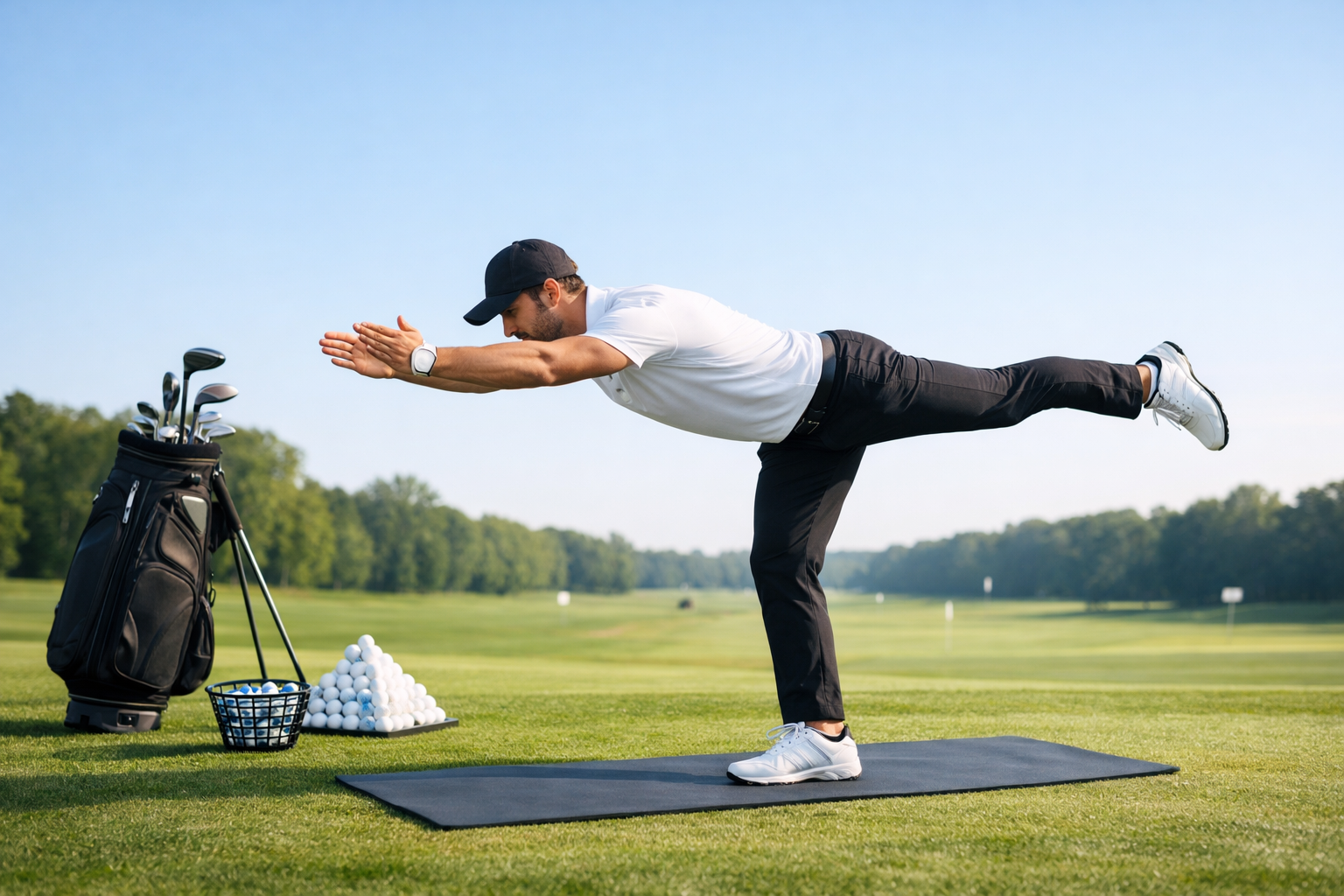
If you want a smoother, more controlled golf swing, yoga can be one of the most effective tools in your training toolbox. A strong swing is not just about power. It is about rotation, balance, body awareness, mobility, and the ability to repeat the same movement under pressure. Yoga helps develop all of these qualities while also supporting recovery and reducing the risk of common overuse injuries.
For golfers of all ages and experience levels, the right mix of yoga poses and targeted stretches can improve posture, open up tight hips and shoulders, strengthen the core, and create the kind of body control that translates directly to the course. Whether you are a beginner looking for consistency or a former athlete aiming to get back to moving well, yoga can help you build a more efficient and resilient golf swing.
Why Yoga Helps Your Golf Swing
Golf is a rotational sport that demands coordination from head to toe. Even though the golf swing looks like a simple motion, it relies on a chain of connected movements involving the ankles, hips, spine, shoulders, and wrists. If one area is stiff or weak, the body often compensates elsewhere. That can lead to a swing that feels restricted, inconsistent, or uncomfortable.
Yoga improves the physical qualities that matter most in golf:
- Mobility: Better range of motion in the hips, thoracic spine, and shoulders supports a fuller turn.
- Stability: A stronger core and better balance help you stay grounded through the swing.
- Body awareness: Yoga teaches you to feel where your body is in space, which improves control and precision.
- Breathing: Controlled breathing can reduce tension and improve focus before and during a round.
- Recovery: Gentle stretching and movement help reduce stiffness after practice or play.
In other words, yoga does more than make you more flexible. It helps you move with intention, which is exactly what a reliable golf swing needs.
The Golf-Specific Benefits of Yoga
1. Bigger, freer rotation
A good backswing and follow-through depend on rotational mobility. Many golfers are tight in the hips, mid-back, and shoulders, which can limit turn and force the arms to do too much work. Yoga helps restore movement in those areas so your body can rotate more naturally.
2. Better extension and posture
Golf posture matters. If your upper back rounds forward or your hips are locked up, it becomes harder to maintain a stable address position. Yoga encourages a tall spine, open chest, and length through the body, which can help you set up with better alignment and maintain it throughout the swing.
3. Improved control under pressure
One of the biggest advantages of yoga is that it builds awareness. When you know how to activate the right muscles and relax unnecessary tension, your swing becomes more repeatable. That is especially helpful when pressure rises on the tee box or you are trying to recover from a bad hole.
4. Reduced risk of injury
Golf injuries often show up in the lower back, shoulders, elbows, and wrists. Tight muscles and poor movement patterns can place extra stress on these joints. Yoga supports healthier movement mechanics, which may lower the chance of strain and overuse issues over time.
5. Better balance and weight transfer
A consistent golf swing requires balance from start to finish. Yoga strengthens the feet, ankles, legs, and core, all of which play a role in keeping you stable as you shift weight through the swing.
Best Yoga Poses for Golfers
The following yoga poses are especially useful for golfers because they target the areas that matter most: hips, hamstrings, spine, shoulders, and core. You do not need to be advanced to benefit from them. Start slowly, focus on breathing, and move with control.
Downward-Facing Dog
This classic pose stretches the hamstrings, calves, shoulders, and back while encouraging length through the entire body. It is a great way to wake up stiff muscles before a round or after sitting for long periods.
Why it helps golf: Opens the back body, improves shoulder mobility, and builds awareness of alignment.
Low Lunge
Low lunge is excellent for opening the hip flexors, which often become tight from sitting or repeated bending. Tight hip flexors can limit extension and rotation, especially in the lead leg and trail leg positions.
Why it helps golf: Supports hip mobility and helps you create a more athletic stance.
World’s Greatest Stretch
Although often used in fitness warm-ups, this movement works very well for golfers. It combines a lunge, hip opener, and thoracic rotation into one fluid stretch.
Why it helps golf: Improves rotation through the trunk while opening the hips and shoulders together.
Thread the Needle
This pose gently rotates the thoracic spine and releases tension through the upper back and shoulders. A mobile upper back is essential for a complete turn without forcing the lower back to do too much.
Why it helps golf: Encourages spinal rotation and helps reduce stiffness in the upper body.
Triangle Pose
Triangle pose builds length through the side body while improving hip stability and shoulder opening. It also trains balance, which is useful for standing tall and stable in your setup and finish.
Why it helps golf: Supports lateral flexibility, balance, and posture control.
Pigeon Pose
Pigeon pose is a powerful hip opener, especially for the glutes and outer hips. Many golfers carry tension in these areas, which can affect rotational freedom and lead to compensation in the lower back.
Why it helps golf: Releases hip tightness that can interfere with smooth rotation and weight shift.
Seated Spinal Twist
Twisting poses help restore mobility in the spine while teaching the torso to rotate independently of the hips. This is useful for developing a fuller turn in the backswing and a cleaner finish.
Why it helps golf: Improves rotational control and thoracic spine movement.
Bridge Pose
Bridge pose strengthens the glutes and back body while opening the front of the hips and chest. Strong glutes are important for power transfer and stability during the swing.
Why it helps golf: Builds posterior chain strength and helps counteract desk posture or sitting stiffness.
Chair Pose
Chair pose trains leg strength, core engagement, and balance. It may look simple, but it teaches you to hold tension where you need it while staying upright and stable.
Why it helps golf: Improves lower-body endurance and postural strength.
Cat-Cow
Cat-cow is one of the best warm-up movements for golfers because it mobilizes the spine and encourages coordination between breathing and movement. It is gentle, effective, and easy to perform before practice.
Why it helps golf: Loosens the back, improves spinal awareness, and prepares the body for rotation.
A Simple Golf Yoga Routine
If you want to start using yoga for your golf game, you do not need a long or complicated practice. A short, focused routine performed three to five times per week can make a noticeable difference.
- Cat-Cow: 6 to 8 slow rounds
- Downward-Facing Dog: Hold for 30 to 45 seconds
- Low Lunge: 30 seconds per side
- Thread the Needle: 30 seconds per side
- Triangle Pose: 20 to 30 seconds per side
- Pigeon Pose: 30 to 45 seconds per side
- Seated Spinal Twist: 30 seconds per side
- Bridge Pose: 8 to 10 controlled repetitions
- Chair Pose: Hold for 20 to 30 seconds
Use this sequence as either a pre-round warm-up or a post-round recovery session. Before golf, keep the movements lighter and more dynamic. After golf, hold the stretches a little longer and focus on slow breathing.
How Yoga Helps You Avoid Common Golf Problems
Many golf-related aches and limitations come from the same root issue: poor movement quality. Yoga can help address those patterns in a practical way.
- Lower back tension: Often linked to tight hips and limited thoracic rotation.
- Shoulder strain: Can result from poor posture and lack of upper-body mobility.
- Loss of power: Happens when the body cannot rotate or transfer force efficiently.
- Inconsistent contact: May be caused by balance issues or poor body awareness.
- Early fatigue: Can improve as posture, breathing, and muscular endurance get better.
By improving the way your body moves as a unit, yoga helps reduce unnecessary stress on joints and muscles. That means fewer compensations and a better chance of staying healthy throughout the season.
Tips for Getting the Most Out of Yoga for Golf
To get real results, use yoga with intention rather than treating it like a random stretch session. A few simple habits can make it more effective:
- Focus on consistency: Short sessions done regularly are more useful than occasional long sessions.
- Match your practice to your needs: If your hips are tight, give them extra attention. If your upper back is stiff, spend more time on rotation.
- Pair yoga with strength training: Mobility works best when it is supported by strength, especially in the core, glutes, and legs.
- Do not force flexibility: Move within a safe range and breathe through tight spots instead of pushing hard.
- Use yoga as part of recovery: It can help you bounce back after a long round or heavy practice day.
Golfers often chase speed, but speed without control can be inconsistent. Yoga helps you develop both control and efficiency, which is why it is such a valuable complement to training.
Key Takeaways
- Yoga improves mobility, stability, and body awareness for a more controlled golf swing.
- Better hip, shoulder, and thoracic spine mobility can support a bigger and smoother turn.
- Poses like Downward-Facing Dog, Low Lunge, Thread the Needle, and Pigeon Pose are especially useful for golfers.
- A short, consistent yoga routine can help reduce stiffness and lower the risk of common golf-related injuries.
- Combining yoga with strength training creates the best foundation for performance, posture, and long-term movement health.
Frequently Asked Questions
Can yoga really improve my golf swing?
Yes. Yoga can improve the physical qualities that support a better swing, including rotation, balance, posture, mobility, and control. It will not replace practice, but it can help your body move more efficiently and consistently.
What type of yoga is best for golfers?
Gentle, mobility-focused yoga is a great place to start. Vinyasa flow, hatha yoga, and targeted mobility sessions can all work well. The most important factor is choosing poses that open the hips, spine, and shoulders while building body awareness.
How often should I do yoga for golf?
Even 10 to 20 minutes, three to five times a week, can help. If you play or practice often, a short warm-up before golf and a recovery session afterward can be especially beneficial.
Do I need to be flexible to start?
No. Yoga is designed to meet you where you are. In fact, golfers who feel especially tight often benefit the most. The goal is not to force flexibility, but to improve movement over time.
Can yoga help prevent golf injuries?
Yoga may help lower injury risk by improving mobility, posture, balance, and muscle control. It can also reduce the stress placed on the lower back, shoulders, and other commonly irritated areas. If you already have pain or a medical issue, it is best to check with a qualified professional.
Conclusion
A better golf swing is not just about swinging harder. It is about moving with more control, creating usable range of motion, and staying strong and stable from setup to finish. Yoga supports all of those goals in a way that is practical, accessible, and sustainable.
By regularly practicing a few golf-focused poses and stretches, you can improve your rotation, increase your extension, sharpen your balance, and reduce the chances of injury. That means more confidence on the course and a body that is better prepared for the demands of the game.
Whether you are working your way back into fitness, trying to protect your joints, or looking for a simple way to play better, yoga is a smart addition to your golf routine.
Call to Action
Like this article? Please share it. Also, register to follow LINKfit and receive our latest articles once a week. LINKfit – Show up.