
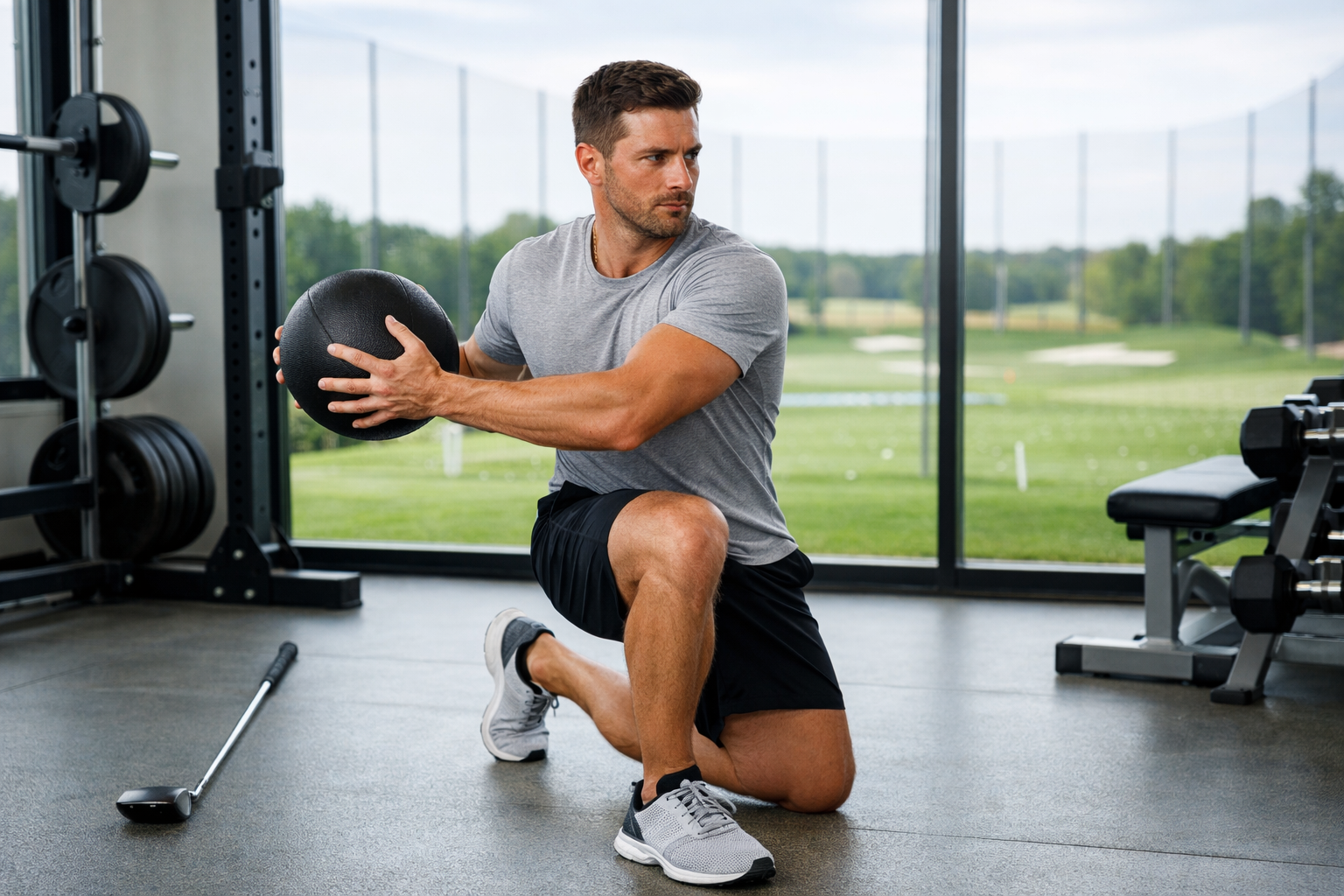
Golf looks smooth, but a powerful swing asks a lot from the body. You need force from the ground, control through the trunk, and enough strength in the upper body to transfer energy efficiently to the club. That is why a well-designed weightlifting program for golf can make such a difference. It can help you hit the ball farther, swing faster, move more efficiently, protect your joints, and stay balanced from the first tee to the final putt.
For many golfers, strength training is still misunderstood. Some think lifting weights will make them stiff. Others worry it is only for athletes in their twenties. In reality, the right program can help beginners, experienced players, former athletes getting back into shape, and older golfers who want to keep playing well for years to come.
Why weightlifting helps your golf game
Golf is a skill sport, but it is also a power and movement sport. The swing is a blend of mobility, stability, timing, and force production. Strength training supports all of it. When you become stronger, you give your body a larger engine to draw from during the swing.
More strength can lead to more distance. When you can create and control force better, you can transfer more speed into the club and then into the ball. That does not mean lifting heavy automatically creates distance. It means a smart program builds the physical base needed to express more power with good technique.
Faster swing speed is often a natural outcome. Golf swing speed depends on how efficiently you can rotate, brace, and release force. Exercises that improve strength in the legs, hips, core, back, and shoulders can help create a more explosive motion without losing control.
Injury protection matters just as much. Golf may not look violent, but the repeated twisting, bending, and walking can stress the lower back, hips, shoulders, elbows, and wrists. Strength training helps build tissue tolerance, joint support, and better movement mechanics so your body can handle the demands of practice and play.
Balance improves when your foundation improves. A stable lower body and strong trunk help you stay centered through the backswing, transition, and follow-through. Better balance often means better contact, more consistency, and fewer poor shots caused by excessive sway or loss of posture.
Think of strength training as insurance for performance: it helps you play better now and stay capable later.
Lower body exercises that support a stronger swing
Your legs and hips are the foundation of the golf swing. They help load, stabilize, and drive force into the ground. If you want better power and control, the lower body should be a major focus of your training.
1. Goblet squat or front squat
Squats build leg strength, trunk stability, and posture. They are excellent for golfers because they train the body to stay stacked and controlled while the legs do the work.
2. Split squat or reverse lunge
Golf is a unilateral sport, so single-leg strength matters. Split squats and reverse lunges improve balance, hip stability, and leg symmetry. They also help prepare you for the shifting demands of the swing and walking the course.
3. Romanian deadlift
This movement strengthens the hamstrings, glutes, and back line of the body. It teaches hip hinge mechanics, which can carry over well to athletic posture and power production.
4. Step-up
Step-ups build single-leg strength and control while reinforcing stability in the hips and knees. They are simple, practical, and highly transferable to golf.
5. Glute bridge or hip thrust
Strong glutes help support posture, pelvic control, and rotational power. These exercises are especially useful if you sit a lot during the day or feel your lower back doing too much work.
When training the lower body, focus on quality movement first. Good alignment, controlled tempo, and full-foot pressure matter more than chasing numbers.
Core and rotation training for better control and power
Golfers often hear “use your core,” but the core is not just about crunches. In golf, the core must stabilize while also allowing controlled rotation. You need strength to resist unwanted movement and enough mobility to turn with rhythm.
1. Pallof press
This anti-rotation exercise helps train the trunk to resist twisting. It is excellent for building stability through the midsection and improving control during the swing.
2. Cable or band chops
Chops help train rotational strength through the torso and hips. They are especially useful when performed with good sequencing and control rather than speed alone.
3. Dead bug
This simple core drill improves coordination between the ribs, pelvis, and spine. It helps build better bracing and posture, both of which matter for a repeatable swing.
4. Side plank
Side planks strengthen the obliques, glutes, and shoulder stabilizers. They also improve lateral stability, which helps with balance and posture in the swing.
5. Medicine ball rotational throw
For golfers who already have a movement foundation, medicine ball throws can help develop explosive rotational power. These should be done with proper coaching and good mechanics, not rushed.
The goal is not to twist harder all the time. The goal is to create a torso that can both stabilize and accelerate at the right moments.
Upper body strength and structure for a smoother swing
A golf swing is not an arm swing, but the upper body still matters. Strong shoulders, a stable upper back, and a healthy pressing and pulling balance help you create structure, maintain posture, and reduce stress on the joints.
1. Dumbbell row or cable row
Rows build the upper back, which helps support posture and shoulder health. They are especially valuable for golfers who spend long hours sitting or working at a desk.
2. Push-up or dumbbell bench press
Pressing exercises help develop chest, shoulder, and triceps strength. Keep the volume balanced with pulling work so the shoulders stay healthy and well-supported.
3. Landmine press
The landmine press is a great golf-friendly exercise because it trains the shoulder in a more natural pressing angle while also challenging core stability.
4. Face pull
Face pulls help strengthen the rear shoulders and upper back. They are excellent for posture, shoulder health, and keeping the body organized through rotation.
5. Farmer carry
Farmer carries build total-body strength, grip, posture, and trunk stability. They are one of the most useful and underrated exercises for golfers of all ages.
Healthy shoulders and a strong upper back are not just about power. They help you maintain position, control the club, and reduce wear and tear over time.
How a weight training program helps young golfers
For young golfers, strength training can be a game-changer when it is done appropriately. The goal is not to create a bodybuilder. The goal is to build athletic movement, coordination, confidence, and a strong base for long-term development.
Young golfers who train well often improve in several areas at once:
- Better movement skills through squatting, hinging, bracing, carrying, and rotating
- More speed potential as they develop a stronger physical foundation
- Better injury resistance during practice, competition, and growth periods
- Improved body awareness, which can help with swing mechanics and consistency
- Greater confidence because they feel stronger, more capable, and more athletic
At younger ages, the best approach is usually technique-first. Use bodyweight drills, medicine balls, bands, light dumbbells, and supervised strength training to build habits that last. Young golfers who learn how to move well early often have a much better chance of reaching their potential later.
How strength training helps golfers age well and keep playing
Golf is one of the great lifelong sports, and strength training helps keep it that way. As we age, we naturally lose muscle mass, power, mobility, and recovery capacity unless we train them. A consistent weightlifting program can slow that decline and help golfers stay active for many more seasons.
For older golfers, the benefits are practical and immediate:
- Better joint support for knees, hips, shoulders, and back
- More confidence in movement when getting out of chairs, walking the course, or rotating through the swing
- Less fatigue during long rounds and practice sessions
- Improved balance, which can reduce compensation and help maintain consistency
- More independence and overall quality of life outside golf
The right program for an older golfer does not need to be extreme. Two to three full-body sessions per week, with smart loading and attention to recovery, can make a real difference. For many players, the result is simple: they feel better, move better, and keep enjoying the game longer.
How to structure a golf strength program
A good golf weight training program should be balanced, progressive, and realistic. It does not need to take over your week. In fact, the best program is the one you can stick to consistently.
A practical framework might include:
- Lower body strength with squats, lunges, deadlifts, or step-ups
- Core and rotation work with anti-rotation drills, chops, carries, and medicine ball throws
- Upper body pushing and pulling to support posture and shoulder health
- Mobility and recovery to keep the body moving well between sessions and rounds
- Progressive overload so the body continues adapting over time
It is also important to match the program to the individual. A beginner may need more movement prep and lighter loads. A former athlete may tolerate more intensity. An older golfer may benefit from lower volume, slower progression, and extra recovery work. The best program is the one that fits the person, not just the sport.
Key takeaways
- Strength training can improve distance, swing speed, balance, and injury protection.
- Lower body work builds the foundation for better force production and stability.
- Core and rotation exercises help golfers brace, control, and transfer power efficiently.
- Upper body training supports posture, shoulder health, and swing structure.
- Young golfers can build athleticism and long-term potential with a smart program.
- Older golfers can stay strong, mobile, and competitive for more years.
FAQ
Will lifting weights make my golf swing stiff?
Not if the program is designed well. Strength training should improve mobility, control, and power, not reduce them. Include mobility work, proper technique, and exercises that support rotation and posture.
How often should a golfer lift weights?
Most golfers do well with two to three sessions per week. That is enough to build strength and power while still allowing time for golf practice, recovery, and daily life.
Should golfers lift heavy?
Some golfers can benefit from heavier lifting, but it should be introduced gradually and with good form. Many players get excellent results from moderate loads, single-leg work, core training, and explosive medicine ball drills.
Is strength training safe for older golfers?
Yes, when it is scaled appropriately. In fact, older golfers often benefit greatly from strength work because it supports bone health, balance, muscle mass, and everyday function. A qualified coach can help adjust exercises to the individual.
Can young golfers start lifting weights?
Yes, with proper supervision and age-appropriate exercise choices. Young golfers usually start with bodyweight training, movement skills, light resistance, and learning how to move well before adding more load.
Final thoughts
Weightlifting is not about turning golfers into powerlifters. It is about building the physical qualities that help the swing work better: strength, speed, balance, stability, and resilience. Whether you are a young player trying to reach your potential, a mid-handicapper looking for more distance, or an older golfer who wants to keep playing comfortably, strength training can be one of the most valuable tools in your routine.
When done well, a golf-specific weight program helps you create more force, handle the demands of the game, and enjoy the sport for longer. That is a smart investment in both performance and health.
Call to action
Like this article? Please share it. Also, register to follow LINKfit and receive our latest articles once a week. LINKfit – Show up.